Tree Banding Tape for Forestry Pest Monitoring: A Field Guide for Forest Managers and Research Stations
Quick answer: Forest ecosystems face mounting pressure from invasive insect species.
Introduction: Why Tree Banding Tape Is Essential for Forestry Pest Monitoring
Forest ecosystems face mounting pressure from invasive insect species. According to the USDA Forest Service, non-native pests have caused the loss of entire dominant tree species across North American forests, with estimated economic damages exceeding $4.7 billion annually (Source: USDA Forest Service, “Invasive Species Program,” 2023). Among the most devastating are crawling pests — gypsy moth (Lymantria dispar), pine processionary moth (Thaumetopoea pityocampa) and winter moth (Operophtera brumata) — whose larvae ascend tree trunks each season to defoliate canopies.
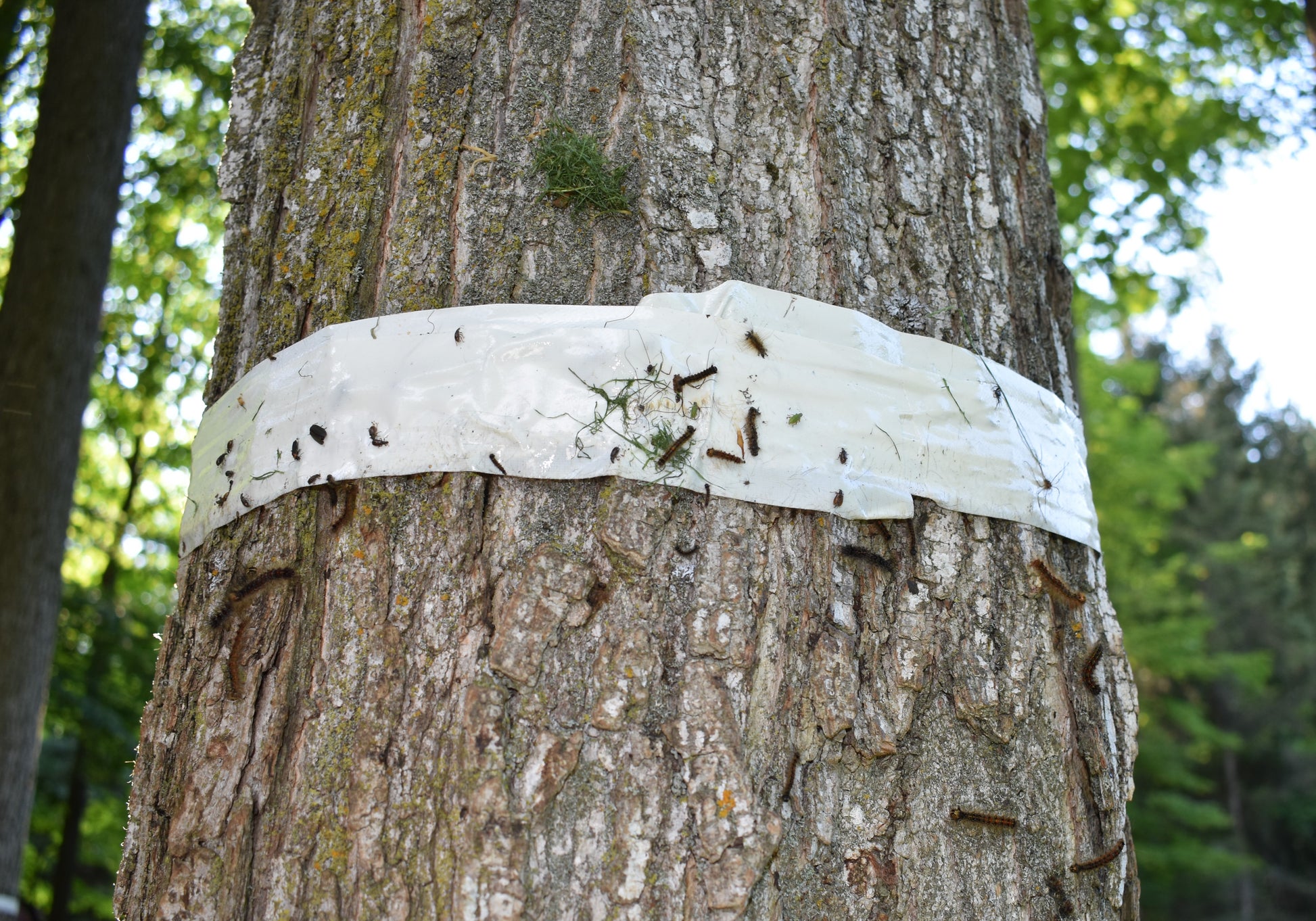
Tree banding tape — also known as crawler barrier forest insect survey ribbon — provides a non-insecticidal, physical interception method that stops these pests before they reach the foliage. For forestry equipment suppliers, forest research stations and agencies running gypsy moth monitoring programs, selecting the right tree banding tape is not a procurement detail — it is a core component of integrated pest management (IPM) strategy. Shandong NongZhiWang Agricultural Technology Co., Ltd. manufactures commercial-grade crawler barrier ribbon engineered specifically for the demands of forestry field deployment.
The Role of Tree Banding Tape in Forestry IPM Programs
Integrated Pest Management (IPM) in forestry relies on multiple control layers: biological, chemical, cultural and physical. Physical barriers — particularly forest pest detection tree banding — offer distinct advantages. Unlike pesticide applications, tree banding tape leaves no chemical residue, poses zero risk to non-target organisms and provides continuous protection throughout the pest migration window. The European Commission‘s Sustainable Use of Pesticides Directive (2009/128/EC) explicitly encourages physical and non-chemical pest control methods as preferred alternatives, making tree banding tape an increasingly important tool for EU-member forestry agencies.
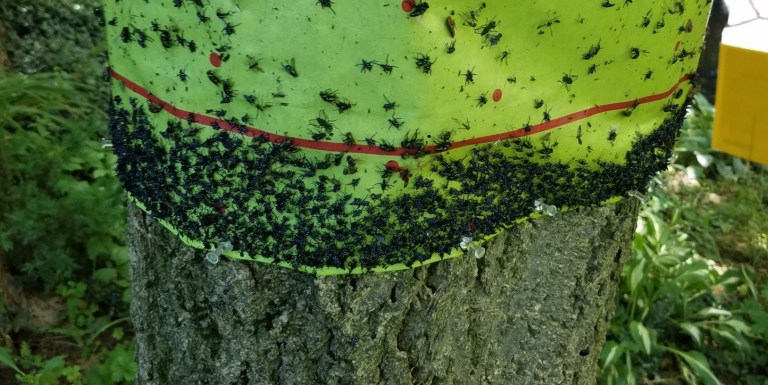
In practice, a gypsy moth monitoring barrier serves dual functions: it traps ascending larvae for population counting and simultaneously prevents defoliation of high-value specimen trees. Research published in the Journal of Economic Entomology (2021) demonstrated that properly installed sticky barriers reduced gypsy moth larval ascent by 87–94% compared to untreated control trees. This efficacy data is why USDA Forest Service procurement specifications and university forestry research protocols routinely include barrier tape in their field equipment lists.
Technical Specifications for Forestry-Grade Tree Banding Tape
Not all barrier tapes are created equal. Forestry applications impose harsher demands than orchard or garden use: extended UV exposure in open-canopy stands, temperature swings from freezing nights to scorching afternoons and rough, deeply furrowed bark on mature trees. Forestry IPM tools must perform reliably across these conditions for an entire monitoring season — typically 120–180 days.
The table below summarizes the key technical parameters that differentiate professional forestry-grade barrier tape from consumer products:
| Parameter | Forestry Specification | Rationale for Field Use |
|---|---|---|
| Substrate | UV-stabilized polyethylene (PE) | PE conforms to irregular bark contours; UV stabilization prevents embrittlement and cracking during 4–6 month field exposure (CE EN 13523-14 compliant) |
| Width | 10–15 cm (standard); 20 cm available | Wider bands accommodate mature trees with deeper bark furrows and increase interception surface area for high-density pest populations |
| Roll Length | 50–100 m | 100 m rolls maximize field crew efficiency — one roll covers 40–50 mature trees at standard banding height, reducing changeover downtime |
| Adhesive | High-tack non-insecticidal acrylic, cold-resistant | Maintains adhesion from −15°C to +50°C; REACH-compliant and RoHS compliant for environmental safety; non-drying formulation prevents “skinning over” during extended deployment |
| Adhesive Layer Thickness | 0.03–0.05 mm | Sufficient depth to entrap insects with chitinous exoskeletons (>0.02 mm grip required); prevents adhesive bridging across bark crevices |
| Color Options | White, green, brown | White maximizes visual contrast for population counting during forest pest detection tree banding surveys; green/brown for aesthetics in recreational forests |
| Documentation | CE, REACH, RoHS | Required for government procurement in EU/NA markets; suited to physical control programmes for responsibly managed forests (FSC, PEFC context) |
The global forestry pest control market was valued at approximately $1.8 billion in 2023 and is projected to reach $2.6 billion by 2028 (Source: MarketsandMarkets, “Forestry Pest Control Market — Global Forecast to 2028”). Within this market, physical barrier products — including tree banding tape forestry pest monitoring systems — represent the fastest-growing segment, driven by regulatory restrictions on broad-spectrum insecticides in forest environments.
Application Protocols for Forest Research Stations
Standardized application is essential for generating comparable data across monitoring plots. The following protocol reflects current best practices used by forest research stations and gypsy moth monitoring programs in North America and Europe:
| Step | Action | Field Notes |
|---|---|---|
| 1. Timing | Install bands before larval hatch — typically late winter to early spring | For gypsy moth: install by March 1 in USDA Plant Hardiness Zones 5–7; adjust by 1–2 weeks per zone shift |
| 2. Site Selection | Wrap at breast height (1.3–1.5 m above ground) | Standardized height ensures consistency across plots; avoid wrapping over moss or loose bark |
| 3. Surface Prep | Brush off loose bark, moss and debris | Clean bark surface improves adhesive contact; use a wire brush for rough-barked species (oak, pine) |
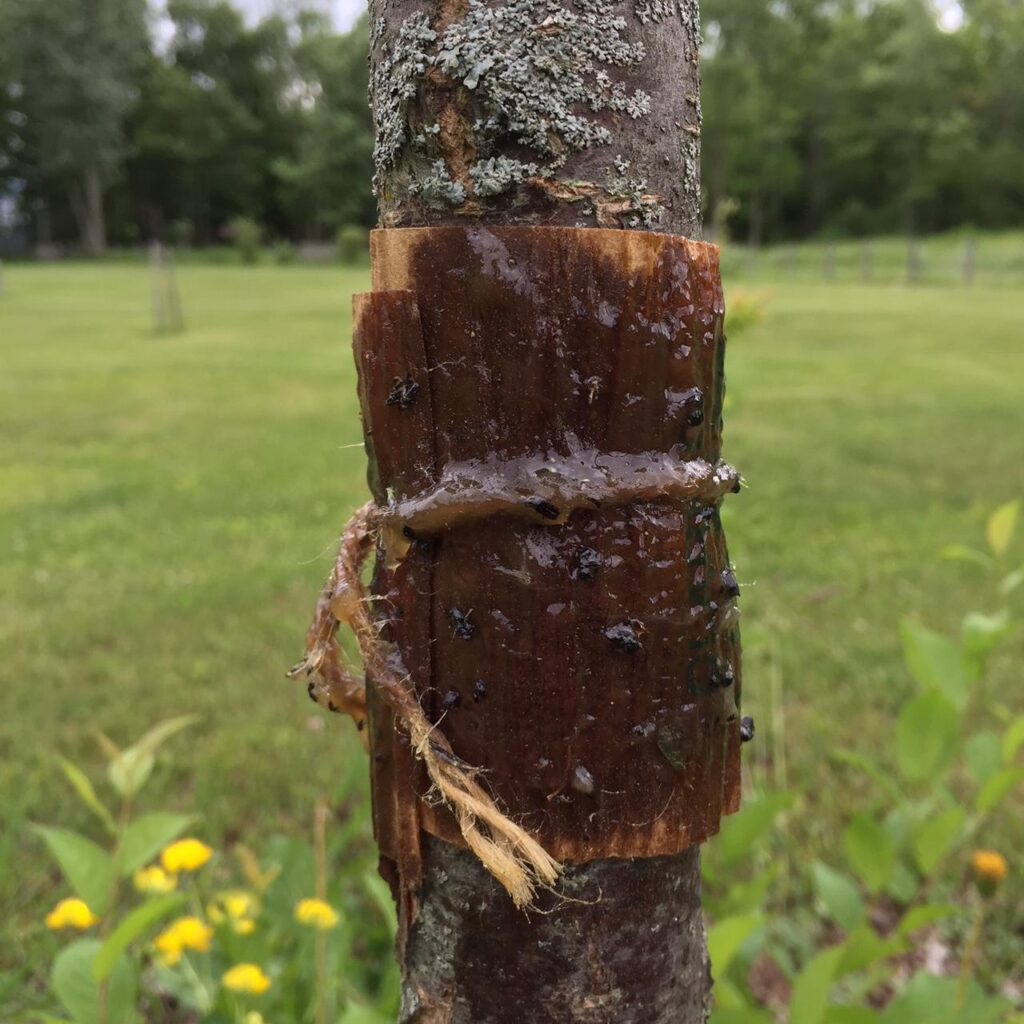
| 4. Band Application | Wrap tape tightly around trunk, 2–3 full circumferences | Overlap seams by 5–10 cm; press firmly to eliminate air gaps that larvae could bypass |
| 5. Securing | Staple or tie top and bottom edges | Prevents wind lift and animal disturbance; use recyclable twine for environmentally sensitive sites |
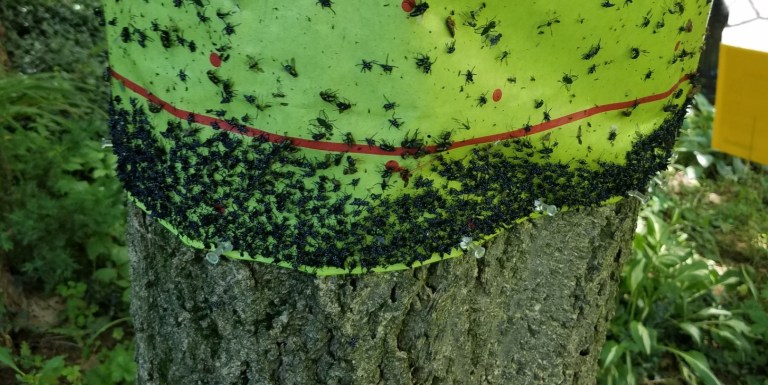
| 6. Monitoring | Inspect bands weekly; count and record trapped specimens | Photograph bands for digital analysis; replace when adhesive surface is >70% covered |
| 7. Removal | Remove bands at end of monitoring period or pest flight season | Dispose of used bands per local waste regulations; do not leave bands on trees — girdling risk increases over time |
For large-scale deployments — such as USDA Forest Service procurement contracts covering thousands of hectares — pre-season planning is critical. Forestry equipment suppliers should coordinate delivery schedules to ensure bands arrive on-site at least 2–3 weeks before the target installation window. Late-arriving materials can miss the critical early-season pest ascent, compromising an entire year of monitoring data. For detailed specifications and bulk procurement inquiries, contact our team directly — we provide tailored quotes for institutional buyers managing multi-site forestry programs.
Documentation Compliance: What Forest Managers Must Verify
Government procurement processes — particularly in EU member states and under USDA Forest Service procurement guidelines — require documented proof of product safety and environmental compliance. Shandong NongZhiWang Agricultural Technology Co., Ltd. maintains the following certification portfolio for our tree banding tape products:
- quality management procedures documentation covering raw material sourcing, production process control and finished product inspection. Annual surveillance audits ensure consistent manufacturing quality across all production batches.
- CE Marking — Declares conformity with EU health, safety and environmental protection standards. Essential for any product entering the European Economic Area forestry supply chain.
- REACH Compliance — Registration, Evaluation, Authorisation and Restriction of Chemicals (EC 1907/2006). Our adhesives are formulated to REACH Annex XVII restrictions, with full substance documentation available for customs clearance.
- RoHS Documentation — Restriction of Hazardous Substances (2011/65/EU). Confirms the absence of lead, mercury, cadmium, hexavalent chromium, PBBs and PBDEs above threshold limits — important for environmentally sensitive forest ecosystems.
- Suitability for non-chemical control programmes — Adhesive formulation contains no synthetic pesticides or prohibited substances, making our tape suitable for forests and research plots where chemical interventions are restricted.
For forestry equipment suppliers and institutional buyers, requesting these certification documents during the vendor qualification phase is standard practice. We provide complete technical dossiers — including third-party SGS test reports — within 48 hours of request. This documentation supports compliance with the European Commission‘s public procurement directives and equivalent frameworks in other jurisdictions.
Comparison: Tree Banding Tape vs. Alternative Forestry Pest Barriers
Forest managers have several options for physical pest barriers. The table below compares tree banding tape forestry pest monitoring against commonly used alternatives:
| Method | Cost per Tree (Annual) | Installation Labor | Monitoring Capability | Environmental Impact |
|---|---|---|---|---|
| Sticky Tree Banding Tape | Low — single roll covers 40–50 trees | 3–5 min per tree | Yes — trapped specimens provide population data | Non-insecticidal, removable, recyclable substrate |
| Trunk Spray Insecticides | Moderate-High — requires repeated application | 2–3 min per tree per application | No — kills on contact, no data retained | Chemical residue; non-target organism risk |
| Burlap Banding | Very Low — reusable material | 5–8 min per tree | Partial — requires manual scraping and counting | Low impact but labor-intensive monitoring |
| Grease/Sticky Barrier Paint | Low — bulk materials | 4–6 min per tree | Yes — similar to tape | Difficult to remove completely; potential bark damage |
| Pheromone Traps | Moderate — lures require replacement | 2–3 min per trap | Yes — species-specific capture data | Low impact; limited to targeted species only |
The data density of sticky banding tape — capturing all crawling species across multiple orders (Lepidoptera, Coleoptera, Hymenoptera) — makes it uniquely valuable for biodiversity monitoring programs. Forest research stations increasingly deploy banding tape not only for pest suppression but also as a survey tool that informs broader forest health assessments.
Customization and Procurement for Institutional Buyers
Shandong NongZhiWang Agricultural Technology Co., Ltd. offers comprehensive OEM customization for forestry agencies and forestry equipment suppliers who require specification-matched products. Customization options include:
- Width and Length: Any combination from 5 cm to 30 cm width; roll lengths from 25 m sample spools to 500 m industrial reels for helicopter-accessed remote plots.
- Adhesive Formulation: Adjustable tack level, UV resistance rating and temperature tolerance for specific climate zones — from boreal forest winters to Mediterranean summers.
- Color Coding: Custom Pantone-matched colors for treatment-zone identification; bilingual printing of installation instructions and safety information directly on tape surface.
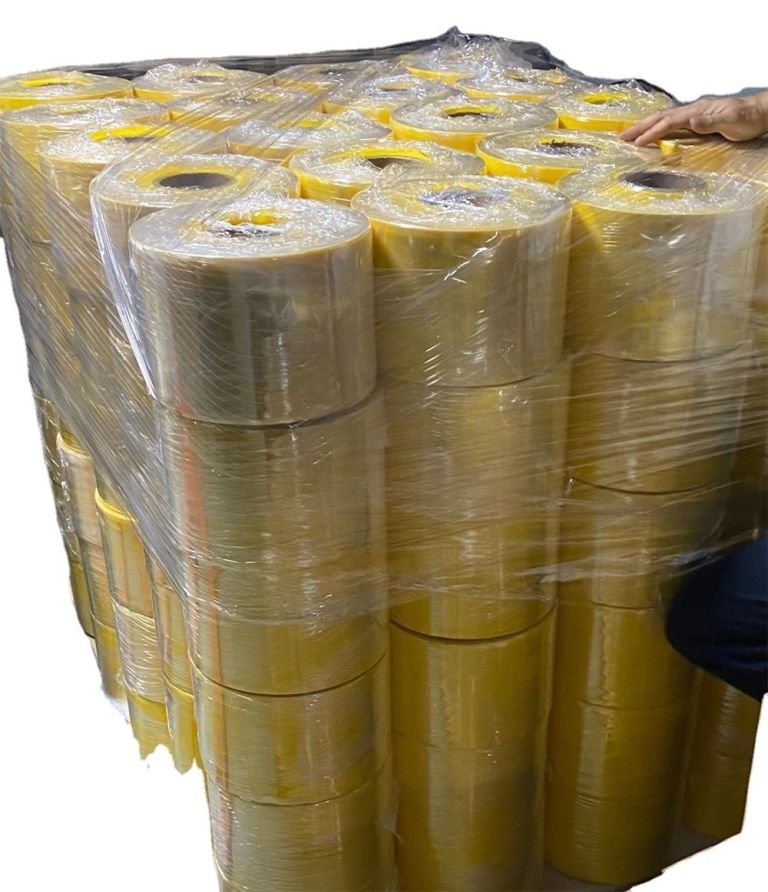
- Packaging: Bulk cartons for centralized distribution centers; individual field kits for remote research stations; moisture-barrier packaging for tropical deployment.
Our manufacturing facility in Shandong Province, China, operates under quality management and maintains REACH/RoHS-compliant production protocols. The European Chemicals Agency (ECHA) maintains a public database of REACH-registered substances — our formulations use only listed and authorized components, with full traceability documentation available for institutional procurement audits.
For field-proven results in agricultural and equestrian settings, our barrier tape technology has demonstrated consistent performance — see our case study on physical barriers in stables for performance data in demanding real-world conditions. For bulk orders of our flagship crawler barrier product, review the full specification sheet for our 15cm × 100m orchard and forestry barrier tape.
Frequently Asked Questions
Q1: How long does tree banding tape remain effective in outdoor forestry conditions?
Our UV-stabilized formulations are engineered for 120–180 days of continuous field exposure under typical temperate forest conditions (USDA Zones 5–8). In high-UV alpine or Mediterranean environments, we recommend inspection at 90 days. Actual field life depends on local dust load, rainfall frequency and pest density. For extreme environments, our R&D team can customize adhesive formulations for extended durability. Contact us for pricing on specification-matched products.
Q2: Is tree banding tape suitable for non-chemical forest programmes?
Yes. The adhesive formulation is non-insecticidal, contains no synthetic pesticides or prohibited substances and is suited to physical control programmes including (Regulation 2018/848) and non-chemical control programmes standards. Our REACH and RoHS documentation — including third-party SGS test reports — provides auditable evidence for certification bodies. Full technical dossiers are available upon request.
Q3: What pests does tree banding tape effectively control?
Our crawler barrier ribbon intercepts all crawling insects that ascend tree trunks: gypsy moth larvae, winter moth, pine processionary caterpillar, codling moth larvae, ants (including carpenter ants), cankerworms, spanworms and scale insect crawlers. The non-selective physical barrier captures across multiple insect orders — a key advantage for forest pest detection tree banding surveys where biodiversity data is also collected. Note that flying adult insects are not captured by trunk barriers; complementary monitoring tools (pheromone traps, sticky panels) may be needed depending on program objectives.
Q4: Can tree banding tape be used alongside chemical pest control programs?
Absolutely. Tree banding tape is fully compatible with conventional, IPM and pest management programs. It can serve as the primary physical barrier in reduced-pesticide strategies, or as a complementary tool that reduces the insect load reaching the canopy — potentially lowering the required application rate or frequency of foliar sprays. Unlike chemical treatments, barrier tape provides continuous, weather-independent protection and generates population monitoring data that informs spray-timing decisions. This dual functionality — barrier plus survey tool — is why CE-marked and quality-controlled products are preferred by institutional forestry programs.
Q5: What is the recommended protocol for large-scale forestry deployments?
For deployments covering >1,000 trees, we recommend: (1) pre-season site survey to determine roll quantities — typically 1 roll per 40–50 trees at single-wrap application; (2) delivery 3–4 weeks before target installation date; (3) crew training on standardized wrapping technique to ensure data comparability across plots; (4) weekly monitoring schedule with standardized data sheets; (5) mid-season replacement planning for high-pest-density zones where bands reach >70% coverage. Our export team provides logistics support for institutional orders — contact us for pricing on bulk quantities.
Q6: What documentation support government procurement of tree banding tape?
Our products are supported by (quality management), CE marking (EU conformity), REACH compliance (EC 1907/2006) and RoHS compliance (2011/65/EU). Additional documentation — including SGS third-party test reports for heavy metals, phthalates and PAHs — is available for customs clearance and procurement compliance. These certifications meet the documentation requirements for EU public procurement directives and USDA Forest Service procurement specifications, providing institutional buyers with the verification trail needed for audited purchasing processes.
+86 155 5018 1368
+86 186 6080 2692
+86 188 5516 6509
+86 155 5018 1368
keenfly100@gmail.com
wisetraps.com
Shandong NongZhiWang Agricultural Technology Co., Ltd.
Request a Quote or Free Sample
KEENFLY (Shandong NongZhiWang Agricultural Technology Co., Ltd.) makes this product in our own factory in Shandong, China. Wholesale, OEM and private label: send your target size, glue load, printed artwork and annual volume and we reply with the specification and quotation.
We reply within 24 hours.
WhatsApp: +86 155 5018 1368 / +86 186 6080 2692
WeChat: +86 188 5516 6509 / +86 155 5018 1368
Email: keenfly100@gmail.com


2 Comments