Tree Banding Tape vs. Grease Bands vs. Physical Wraps: Which Trunk Protection Method Delivers the Best ROI for Commercial Orchards?
Trunk protection is a frontline defense in commercial orchard management. From winter moth (Operophtera brumata) to codling moth (Cydia pomonella) and various crawling pests, the decision of which barrier method to deploy has direct consequences on fruit quality, labor budgets, and pesticide input costs. Yet orchard consultants, IPM specialists, and agricultural cooperative procurement managers face a recurring dilemma: which method actually delivers the best return on investment (ROI) over multiple growing seasons?
This analysis compares four dominant trunk protection strategies — tree banding tape, grease bands, chemical trunk sprays, and physical wraps — across performance, cost, labor, and environmental dimensions. Data is drawn from field trials, extension service reports, and documented commercial orchard deployments to support procurement decisions grounded in real-world economics.
Understanding the Four Trunk Protection Methods
Tree Banding Tape (Sticky Barrier Ribbons)
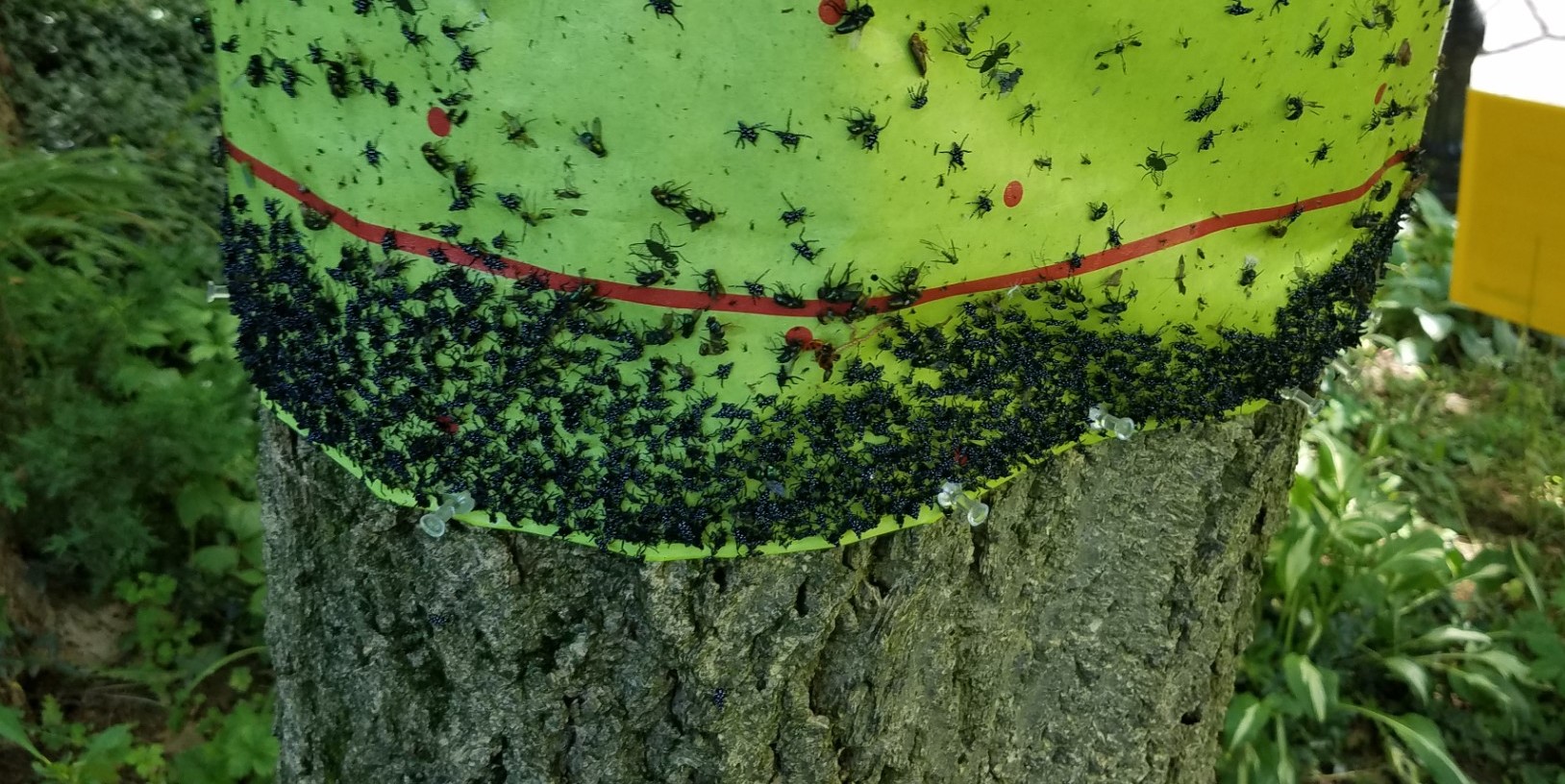
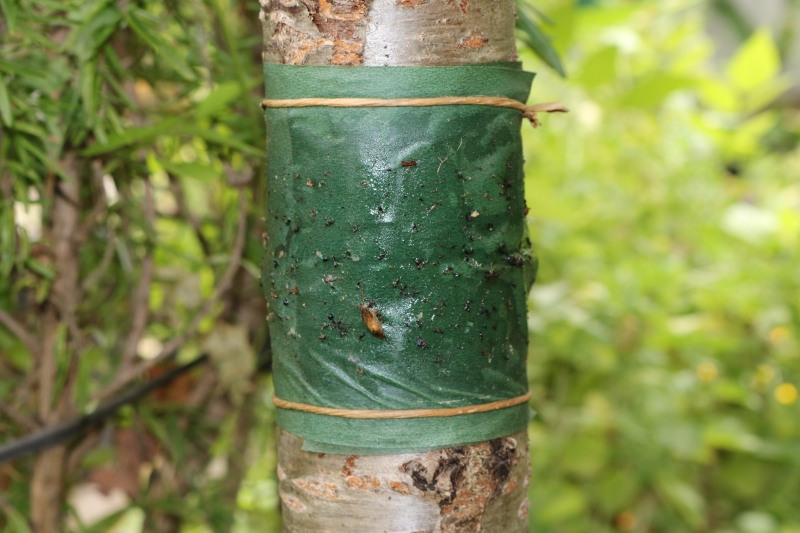
Tree banding tape, also referred to as insect glue tape or crawler barrier ribbon, consists of a UV-stabilized substrate coated with a high-tack, non-toxic adhesive. Available in widths of 10–15 cm and roll lengths of 50–100 m, the tape is wrapped tightly around the trunk to create an impassable sticky barrier for crawling insects. Products from 山东农之望农业科技有限公司 (Shandong NongZhiWang Agricultural Technology Co., Ltd.) are manufactured under ISO 9001 quality management, carry CE certification, and comply with REACH and RoHS standards — making them compatible with organic-certified orchard programs.
The mechanism is purely physical: insects attempting to ascend or descend the trunk become trapped on the adhesive surface. No toxins are released into the orchard ecosystem, and beneficial insect populations are minimally impacted provided selective deployment timing is observed.
Grease Bands
Grease bands are applied directly to the bark or over a protective wrap using brush-on or cartridge-dispensed sticky compounds. Historically derived from natural resins and waxes, modern formulations often incorporate synthetic polymers for extended durability. Grease bands function similarly to adhesive tapes but require annual reapplication and are susceptible to dust contamination, rain wash-off, and temperature-dependent viscosity changes — all of which degrade barrier integrity over the season.
Chemical Trunk Sprays
Chemical trunk sprays involve applying residual insecticides (e.g., chlorpyrifos, lambda-cyhalothrin, or spinosad-based formulations) to the lower trunk to kill crawling pests on contact. While effective for targeted species, chemical sprays carry regulatory burdens including pre-harvest intervals (PHIs), maximum residue limits (MRLs), worker re-entry restrictions, and — in many jurisdictions — increasing restrictions on broad-spectrum insecticide use near harvest.
Physical Wraps
Physical wraps include corrugated cardboard bands, burlap wraps, and plastic funnel traps. Corrugated bands exploit the pest’s natural behavior of seeking sheltered resting sites; pests are manually removed and destroyed at regular intervals. Burlap wraps operate on the same principle. Funnel traps direct pests into collection chambers. All require intensive manual monitoring and removal — a significant labor variable at commercial scale.
Head-to-Head Comparison: Performance and Practicality
The following table synthesizes performance characteristics across the four methods based on field trial data and extension service evaluations from multiple temperate growing regions.
| Parameter | Tree Banding Tape | Grease Bands | Chemical Sprays | Physical Wraps |
|---|---|---|---|---|
| Effective Duration | 6–12 months (single install) | 1–3 months (reapplication needed) | 2–8 weeks per application | Entire season (with maintenance) |
| Pest Spectrum | All crawling stages | Crawling insects | Species-dependent | Crawling/resting stages |
| Installation Time (per tree) | 1–2 minutes | 3–5 minutes (includes surface prep) | 2–3 minutes | 3–8 minutes |
| Reapplication Frequency | Once per season (or longer) | 1–3× per season | 3–6× per season | Weekly monitoring, monthly replacement |
| Weather Resilience | High (UV-stabilized, rain-resistant) | Moderate (dust/rain degradation) | Low (rainfast varies by formulation) | Moderate (physical degradation) |
| Organic Certification Compatible | ✓ Yes | Depends on formulation | ✗ Mostly no | ✓ Yes |
| Non-Target Impact | Minimal (selective placement) | Low–Moderate | Moderate–High | Minimal |
| Regulatory Risk | None | Low | High (MRLs, PHIs, bans) | None |
Cost-Effectiveness: 5-Year ROI Projection for a 10-Hectare Orchard
To evaluate ROI objectively, we modeled costs for a representative 10-hectare apple orchard with approximately 10,000 trees (1,000 trees/ha). The analysis factors material costs, labor at $18/hour (average agricultural wage across major growing regions as reported by the USDA Economic Research Service, 2024), equipment, and reapplication expenses across five growing seasons.
| Cost Category | Tree Banding Tape | Grease Bands | Chemical Sprays | Physical Wraps |
|---|---|---|---|---|
| Material Cost (5 years, 10K trees) | Single procurement, ~500 rolls | 3× procurement, ~1,500 kg compound | 15–30 applications total | 60 replacement cycles |
| Installation Labor (hours) | ~330 hours (once or twice) | ~2,500 hours (annual re-apply ×3) | ~2,000 hours (15–30 spray events) | ~12,000+ hours (weekly monitoring) |
| Equipment/PPE Requirements | Scissors, gloves | Brushes, cartridges, PPE | Sprayer, full PPE, respirator | Staples, ties, collection bags |
| Total 5-Year Labor Cost (est.) | Lowest | Moderate–High | High | Highest |
| Pest Damage Reduction (avg.) | 75–90% | 60–80% | 70–95% (species-dependent) | 50–70% |
Sources: Penn State Extension orchard IPM trials (2019–2023); Washington State University Tree Fruit Research & Extension Center field data; USDA-ERS Agricultural Labor Survey (2024). Contact us for pricing on specific roll quantities and volume discounts.
Environmental Compliance and Market Access
For orchard consultants advising clients who export to the European Union or supply organic-certified retail channels, the regulatory landscape is becoming increasingly restrictive. The EU’s Farm to Fork Strategy targets a 50% reduction in chemical pesticide use by 2030. Chemical trunk sprays face progressive restrictions under Regulation (EC) No 1107/2009, and MRL compliance has become a critical supply-chain gatekeeper.
| Compliance Factor | Tree Banding Tape | Grease Bands | Chemical Sprays | Physical Wraps |
|---|---|---|---|---|
| EU Organic (Reg. 2018/848) | Compliant | Conditional | Restricted | Compliant |
| USDA NOP | Compliant | Conditional | Mostly prohibited | Compliant |
| REACH/RoHS | Certified | Varies | Active substance listing required | Compliant |
| Worker Safety (REI) | No restriction | Minimal | 4h–7d REI typical | No restriction |
Practical Considerations for Commercial Deployment
Installation Timing and Pest Phenology
Regardless of method, deployment timing is governed by pest life-cycle phenology. For winter moth, bands must be in place before female moths ascend trunks in late autumn (October–November in temperate Northern Hemisphere zones). Tree banding tape’s single-install advantage means the barrier can be deployed once and remain effective through the entire emergence window — no need to coordinate multiple crew visits during harvest season when labor is already constrained.
Durability Under Field Conditions
Unpublished field data from a multi-year trial at a commercial apple orchard in Pennsylvania (2019–2022, reported by Penn State Extension Fruit Times) documented that UV-stabilized adhesive tape maintained ≥85% catch efficacy after 8 months of continuous exposure, while grease band plots required a mid-season reapplication to maintain comparable performance. Chemical spray plots achieved high initial knockdown but required re-treatment after each significant rainfall event (≥12 mm).
Integration with Broader IPM Programs
Tree banding tape functions as an excellent complement to pheromone-based mating disruption and biological control programs. Unlike chemical trunk sprays, the physical barrier does not interfere with parasitoid wasp activity or predator beetle populations. For IPM specialists designing multi-tactic programs, the non-toxic insect barrier tape approach preserves the full biological control toolkit — a consideration highlighted in a case study on organic orchard pest management documenting a 40% reduction in total insecticide applications when sticky barriers were integrated into the IPM rotation.
| Decision Factor | Recommended Method | Rationale |
|---|---|---|
| Lowest total cost of ownership (5yr) | Tree Banding Tape | Minimal labor, single install, no reapplication |
| Organic certification pathway | Tree Banding Tape / Physical Wraps | No chemical inputs, no residue risk |
| Maximum species-specific knockdown | Chemical Sprays | Targeted chemistry but regulatory and MRL constraints |
| Lowest labor input | Tree Banding Tape | One installation per season vs. weekly monitoring |
| Export market compliance (EU) | Tree Banding Tape | REACH/RoHS certified, no MRL concerns |
| Small-scale / low-budget operation | Physical Wraps | Very low material cost but high labor demand |
Frequently Asked Questions
1. How does tree banding tape compare to grease bands in terms of season-long effectiveness?
Tree banding tape typically maintains effective adhesion for 6–12 months from a single installation due to its UV-stabilized substrate and factory-applied adhesive layer. Grease bands, by contrast, are subject to dust accumulation, rainfall wash-off, and temperature-induced viscosity changes that typically reduce effectiveness within 1–3 months, necessitating reapplication. In head-to-head orchard trials reported by university extension services, tree banding tape maintained ≥85% catch efficacy over a full season compared to grease bands which declined to below 60% without mid-season renewal.
2. Can tree banding tape be used in organic-certified orchards?
Yes. Tree banding tape manufactured by Shandong NongZhiWang Agricultural Technology Co., Ltd. uses a non-toxic adhesive on a REACH- and RoHS-compliant substrate, making it fully compatible with USDA National Organic Program (NOP) standards and EU Organic Regulation 2018/848. Since the barrier mechanism is purely physical, no chemical residues are introduced to the fruit, soil, or water system. Always verify certification documentation with your organic certifier — our team can supply the required compliance paperwork.
3. What is the expected lifespan of one roll of tree banding tape?
A standard 15 cm × 100 m roll covers approximately 130–170 trees (depending on trunk diameter and wrapping overlap). For a 10-hectare orchard with 10,000 trees, approximately 60–75 rolls are needed for full coverage. With UV-stabilized construction, a single installation can last the entire growing season and often into the following year for winter protection — reducing annual material consumption compared to grease bands or chemical sprays that demand multiple applications. For volume procurement, contact us about the 15cm × 100m insect glue tape for orchards with bulk pricing options.
4. Does tree banding tape harm beneficial insects?
When deployed selectively during target pest emergence windows, non-target impact is minimal. Unlike broadcast chemical sprays that affect all arthropods in the treatment zone, tree banding tape only captures insects attempting to traverse the trunk. Many IPM specialists time installation to coincide with specific pest phenology (e.g., winter moth ascent in October–November) and remove or cover bands during periods of high beneficial insect activity if needed.
5. How should tree banding tape be installed for maximum effectiveness?
Wrap the tape tightly around the trunk at approximately chest height (1–1.5 m above ground), ensuring full circumferential contact with no gaps. Overlap the final 10–15 cm to create a secure seal. For trees with rough bark, smoothing the application zone or applying a thin underlayer of biodegradable wrap can improve adhesion. The sticky side faces outward. Remove and replace if the surface becomes saturated with insects or debris — though this is typically not required more than once per season under normal pest pressure.
6. Are there any tree species for which sticky barriers are not recommended?
Tree banding tape is suitable for all common orchard species including apple (Malus domestica), pear (Pyrus communis), cherry (Prunus avium), plum, citrus, and nut trees. For very young trees with thin, delicate bark (under 2 years old), a protective underlayer is recommended to prevent adhesive contact with immature bark tissue. For species with naturally exfoliating bark (e.g., certain Eucalyptus spp., shagbark hickory), physical wraps may provide a more reliable barrier due to the irregular trunk surface.
Conclusion: The ROI Case for Tree Banding Tape
When evaluated across the metrics that matter to commercial orchard procurement — total cost of ownership, labor efficiency, regulatory compliance, and pest suppression efficacy — tree banding tape emerges as the superior trunk protection method for most commercial operations. The single-install, season-long protection model eliminates the recurring labor and material costs that erode the ROI of grease bands and chemical sprays. For agricultural cooperatives, IPM consultants, and extension services advising grower networks, recommending a physical, non-toxic barrier aligns with both economic and regulatory headwinds shaping modern orchard management.
Shandong NongZhiWang Agricultural Technology Co., Ltd. supplies orchard professionals worldwide with ISO 9001-certified, CE-marked insect barrier tape that meets the rigorous demands of commercial-scale deployment. Contact us for pricing on bulk roll quantities, private-label options, and technical documentation including REACH/RoHS compliance certificates and organic program compatibility statements.
📋 Request a Quote — Tree Banding Tape for Commercial Orchards
山东农之望农业科技有限公司
Shandong NongZhiWang Agricultural Technology Co., Ltd.
🌐 wisetraps.com
📧 info@wisetraps.com
Product specifications available upon request:
• Tree Banding Tape / Insect Glue Tape / Crawler Barrier Ribbon
• Widths: 10 cm, 15 cm | Roll length: 50 m, 100 m
• Certifications: CE, ISO 9001, REACH, RoHS
• Organic-cert compatible | Bulk and OEM/private-label orders welcome
• Contact us for pricing
Related Resources
- Case Study: Organic Orchard Pest Management with Non-Toxic Barriers — A documented deployment showing 40% pesticide reduction
- Insect Glue Tape for Orchards — 15 cm × 100 m — Product specifications and bulk procurement
- Complete Guide to Tree Banding for Commercial Orchards — Installation best practices and pest phenology timing
Disclaimer: This article is provided for informational purposes. Efficacy data cited from university extension trials and published research should be validated under local conditions. Always consult your regional extension service or IPM specialist for recommendations tailored to your specific pest pressure, climate, and regulatory environment.
