The Evolution of Residential Roach Control: Engineering Food-Grade, Non-Toxic Traps for Modern Families
The Evolution of Residential Roach Control: Engineering Food-Grade, Non-Toxic Traps for Modern Families
For the modern consumer, the traditional cockroach ‘motel’ filled with neurotoxic pesticides is increasingly unacceptable. With the rise of ‘Green Living’ and heightened awareness of indoor air quality, the demand for family-safe, non-toxic roach control has moved from a niche market to a mainstream requirement. This article examines the science behind food-grade attractants and the mechanical engineering that makes ‘Toxic-Free’ trapping effective for residential and office environments.
The ‘Family-Safe’ Philosophy: Beyond the Label
A ‘Non-Toxic’ label is often a marketing term, but in professional-grade hardware, it refers to a specific design criteria that eliminates the risk of accidental exposure to harmful chemicals. Our engineering team at Jizhuang Village ensures that every residential trap meets the same quality standards as our industrial pharmaceutical-grade equipment.
1. Zero Pesticides
No pyrethroids, organophosphates, or neonicotinoids. By removing these chemicals, we eliminate the risk of pesticide drift in the home, which is especially critical in households with infants or pets who are more susceptible to neurotoxic effects. Our traps rely on physical immobilization rather than chemical termination.
2. Hypoallergenic Attractants
Using scent profiles that are attractive to insects but neutral to humans and pets. Engineering these attractants involves identifying the specific volatile organic compounds (VOCs) that cockroaches use to locate food and aggregation sites. By synthesizing these naturally occurring scents, we create a powerful lure that contains no synthetic fragrances or allergens.
3. Physical Containment
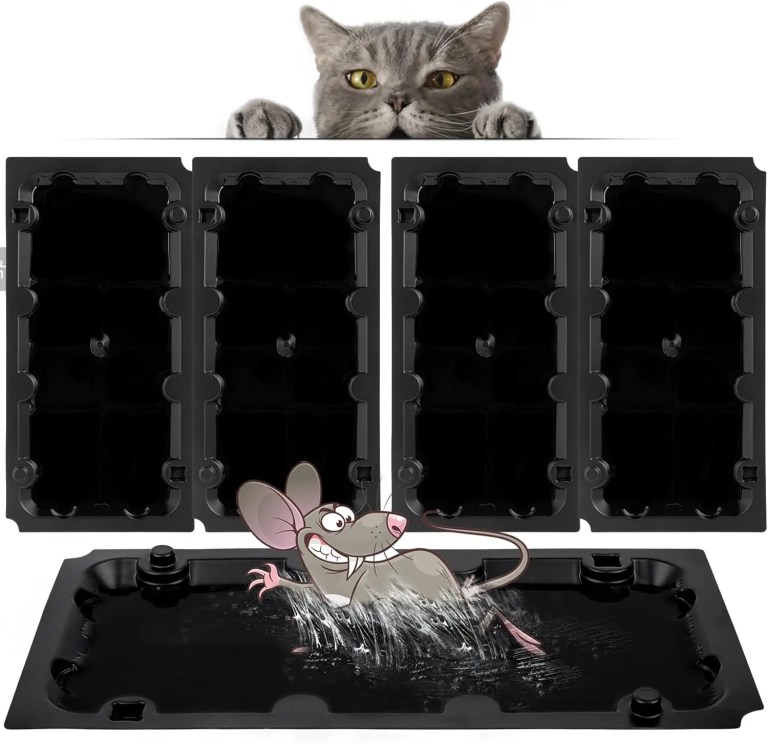
The trap must be ‘Tamper-Resistant,’ meaning even if a child or pet interacts with the trap, there is no chemical residue to ingest or touch. The high-performance adhesive is contained within a rigid, low-profile housing that prevents accidental contact with the glue surface, while still allowing easy entry for the target pests.
The Science of Food-Grade Attractants
If you aren’t using poison, how do you catch a cockroach? The answer lies in ‘Nutritional Phagostimulants.’ From a factory floor perspective, this is a matter of precision blending and shelf-life stability.
1. Mimicking the ‘Scavenger Profile’
Cockroaches, particularly the German Cockroach (Blattella germanica), are opportunistic feeders. They are attracted to a specific balance of proteins and carbohydrates. Engineering a non-toxic lure involves creating a ‘Synthesized Food Scent’—typically a blend of vanillin, maltose, and specialized yeast extracts. This creates a scent trail that the roach perceives as a high-value food source, drawing them away from actual food waste in the home and into the trap.
2. Aggregation Pheromone Synergy
Beyond food, roaches are attracted to ‘Home.’ By adding synthetic aggregation pheromones to the food-grade lure, the trap signals to the roach not only that there is food, but that other roaches are safely gathered there. This dual-action approach significantly increases capture rates compared to simple glue boards that rely on chance encounters. Our manufacturing process ensures that these pheromones remain active for up to 90 days, even in the fluctuating humidity of a domestic kitchen.
Mechanical Design: The ‘Entry-Trap-Hold’ Sequence
A non-toxic trap is a mechanical device. Its effectiveness depends on its geometry and the physics of the adhesive surface.
1. Multi-Entry Architecture
Roaches are ‘Thigmotactic,’ meaning they like to feel surfaces on all sides of their bodies. A well-engineered trap features multiple low-profile entries that mimic the ‘cracks and crevices’ where roaches naturally hide. As the roach enters, it feels ‘safe’ and continues toward the center of the trap, where the highest concentration of the attractant is located.
2. High-Performance Synthetic Glues
The ‘Hold’ is the most critical part. Residential traps must remain effective for months in varying humidity (kitchens vs. living rooms). We use a high-tack, solvent-free adhesive that is applied in a ‘Wave Pattern.’ This increases the surface area and ensures that even if a roach only touches the edge, it is unable to leverage itself free. The adhesive is engineered to remain tacky down to 5°C and up to 45°C, ensuring performance in all climates.
Deployment Strategy for the Home Floor
To maximize results with non-toxic traps, placement is key. Technicians and homeowners alike should follow a ‘Strategic Perimeter’ approach.
1. The ‘Kitchen Triangle’
80% of residential roach activity is in the kitchen. Traps should be placed: behind the refrigerator (where the compressor provides warmth), under the sink (near moisture sources), and inside the pantry (near food sources). Placing traps in these ‘High-Traffic’ zones ensures that pests are intercepted before they can establish a breeding colony.
2. Bathroom and Utility Areas
Roaches travel through plumbing. Placing traps behind toilets and near washing machine drains creates a ‘Perimeter Defense’ that prevents pests from moving from the pipes into the living spaces. In apartment buildings, these utility penetrations are the primary routes for cross-contamination between units, making them the most important monitoring points for long-term control.
SOP Contact & Manufacturing Module
Manufacturer/Facility Location:
500m North of Intersection of Shandong Road & Changjiang Road, West Side, Jizhuang Village, Qinghe Subdistrict, Cao County, Heze, Shandong, China.
Operational Compliance:
We are a leading manufacturer of eco-friendly, non-toxic pest control solutions. Our residential product line is built to the same rigorous standards as our industrial hardware, utilizing food-grade attractants and sustainable materials. We are committed to providing ‘Family-First’ protection without compromising on efficacy. All our products are tested for safety and effectiveness in our dedicated R&D labs. For retail partnerships, bulk orders for property management companies, or to view our full ‘Green-Label’ catalog, please reach out to us at our manufacturing headquarters at the address above. We bring industrial-strength safety to every home.