Tree Banding Tape for Chestnut Orchards: Physical Barrier Against Weevils, Borers, and Ants
Tree Banding Tape for Chestnut Orchards: Physical Barrier Against Weevils, Borers, and Ants
Chestnut growers across the Southern Hemisphere and temperate Northern Hemisphere face a trifecta of climbing pests that damage nuts, bore into trunks, and compromise tree health. Chestnut weevils (Curculio spp.) lay eggs inside developing nuts, borers weaken structural wood, and ant colonies farm aphids that drain sap and spread disease. Tree banding tape from Shandong NongZhiWang Agricultural Technology Co., Ltd. provides a single, chemical-free intervention that addresses all three pest groups simultaneously — wrapping the trunk in a non-drying adhesive barrier that crawling insects simply cannot cross.
With global chestnut production exceeding 2.5 million tonnes annually and organic acreage growing at 8% per year, the demand for non-chemical pest management tools in chestnut orchards is accelerating. For wholesale distributors, B2B pest control suppliers, and agricultural procurement teams, tree banding tape represents a high-margin, repeat-purchase product with strong alignment to organic certification requirements.
Why Chestnut Orchards Are Uniquely Vulnerable
Unlike pome or stone fruit trees, chestnut trees face pest pressure that starts at the soil surface and targets the nut directly. Understanding this pest ecology is essential for selecting the right barrier strategy.
- Chestnut weevil (Curculio elephas / C. sayi): Adult weevils climb the trunk from overwintering sites in the soil, reach the canopy, and oviposit into green chestnut burrs. The larvae feed inside the nut for 4–6 weeks, emerging to burrow back into the soil. A sticky trunk barrier interrupts this cycle at the climb phase.
- Two-lined chestnut borer (Agrilus bilineatus): This flatheaded borer attacks stressed chestnut trees, girdling cambium tissue under the bark. While adult borers fly to trees, larval management benefits from reducing ant-farmed aphid stress that weakens trees and makes them borer targets.
- Ant–aphid synergy on chestnut foliage: ants climb chestnut trunks to tend colonies of chestnut aphids (Myrocrypta species) and scale insects, protecting them from natural predators. Breaking the ant pathway with trunk banding allows parasitic wasps and ladybugs to suppress aphid populations naturally.
- Gall wasps (Dryocosmus kuriphilus): In Asian chestnut varieties, gall wasps cause leaf galls that reduce photosynthesis and nut yield. While gall wasps fly into the canopy, reducing associated ant activity improves overall tree vigor and natural enemy populations.
- Spotted lanternfly (Lycorma delicatula): In regions where this invasive species is established, tree banding tape with sticky adhesive captures nymphs climbing host trees, reducing canopy infestation and egg-laying pressure.
How Tree Banding Tape Works on Chestnut Trees
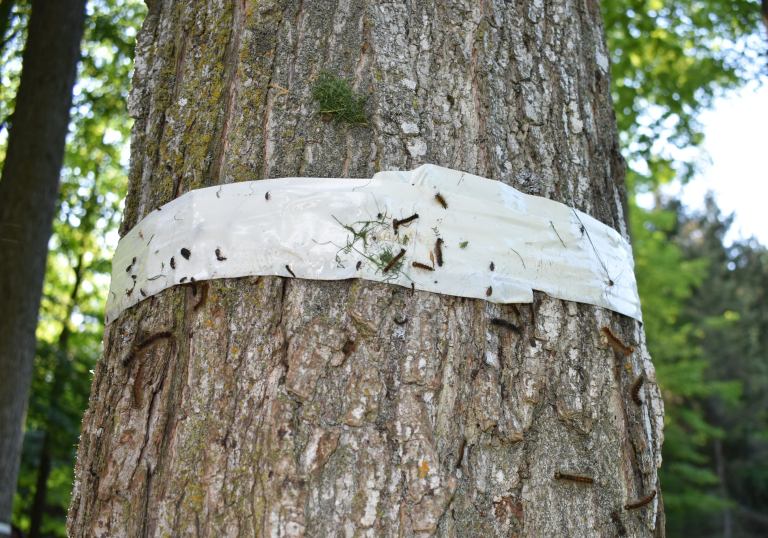
The principle is identical to orchard banding on apple, cherry, or citrus — a sticky film wrapped around the trunk creates an impassable belt for any crawling insect. On chestnut trees specifically, the tape serves a dual function:
- Weevil interception: Adult weevils emerging from soil must climb the trunk to reach nut-bearing branches. A single band at 30–50 cm height captures the vast majority before they reach the canopy.
- Ant pathway disruption: Ants traveling between ground nests and canopy aphid colonies are stopped at the band, severing the mutualistic relationship that protects aphids from biological control.
- Borer stress reduction: By reducing aphid-related stress and improving tree vigor through better natural enemy access, the tape indirectly reduces borer susceptibility in the following season.
For chestnut trees with rough, deeply fissured bark (common in mature Castanea sativa and C. mollissima), wider bands (15–20 cm) and double-sided adhesive are recommended to ensure complete trunk coverage.
NongZhiWang Tree Banding Tape Specifications for Chestnut Applications
| Parameter | Specification | Chestnut Application Notes |
|---|---|---|
| Substrate | PE / CPP / PET film | PE recommended for large rolls (100–200m); PET for visibility |
| Adhesive viscosity | 700–1200 mPa·s | High-tack formula essential for weevil capture — standard tack may let large weevils escape |
| UV resistance | 90 days minimum | Covers full chestnut growing season (May–October in Northern Hemisphere) |
| Temperature range | -15°C to 60°C | Works in temperate chestnut zones from Southern France to Georgia, USA |
| Width options | 5 cm – 20 cm | 15–20 cm recommended for mature chestnut trees with thick, rough bark |
| Coating | Single / Double-sided | Double-sided preferred — captures weevils from both soil-climbing and canopy-descending directions |
| Roll length | 2m – 200m | 100m rolls for commercial orchards (250–500 trees per roll at 50cm circumference per tree) |
| Release liner | Optional | Liner recommended for transport and installation convenience |
Installation Guide for Chestnut Orchards
Proper installation is critical for effectiveness on chestnut trees. The rough, furrowed bark of mature chestnut trees requires specific techniques that differ from smooth-barked fruit trees.
- Clean the trunk surface at the banding height (30–50 cm above soil) — remove loose bark, moss, or debris that could create gaps under the tape.
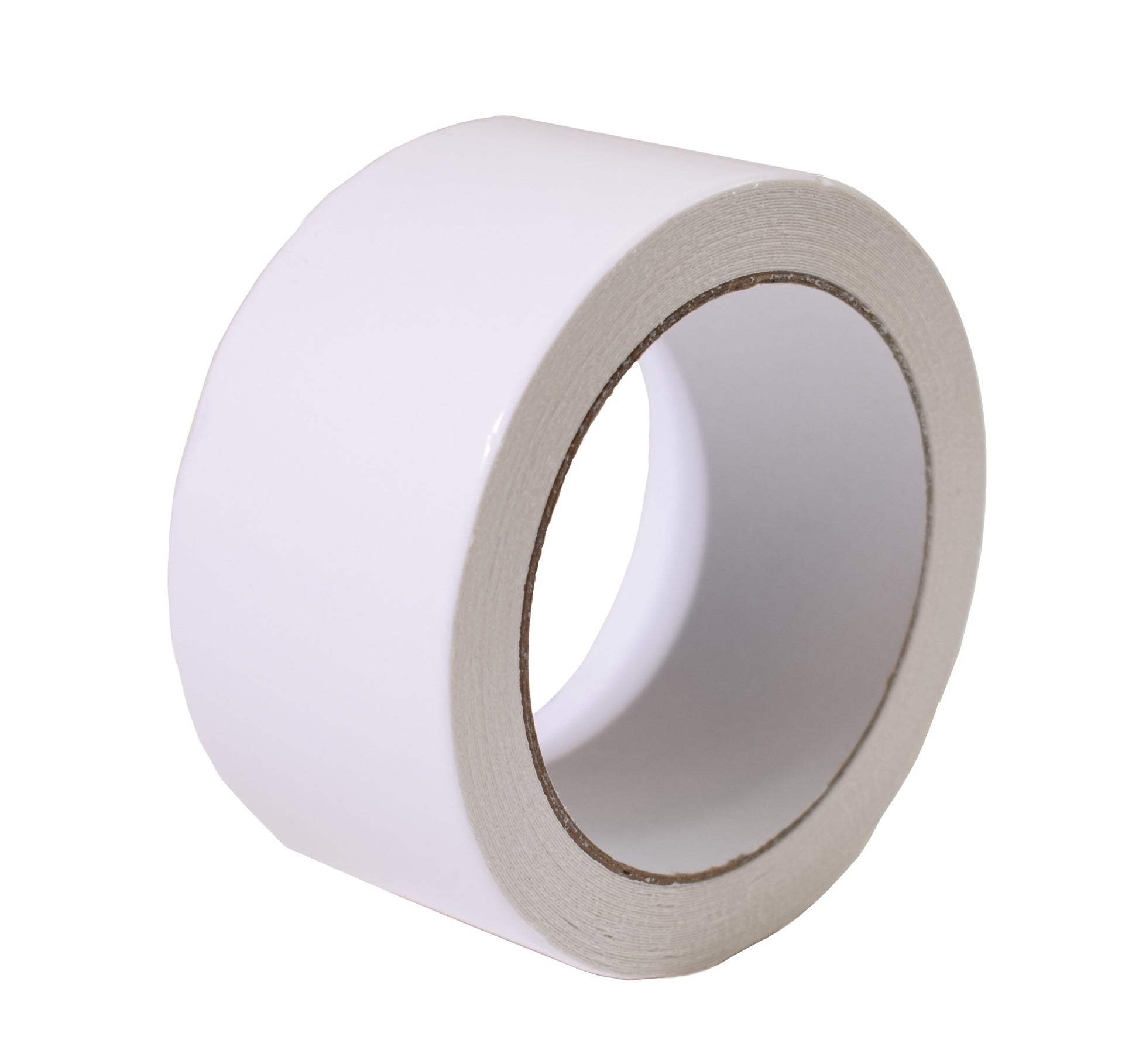
- Apply double-sided tape directly to the cleaned surface, or wrap single-sided tape with the adhesive facing outward. Ensure full 360° coverage with no overlap gaps.
- Secure the ends with a small overlap (2–3 cm) — the adhesive self-seals. For extra security on rough bark, use a thin wire or zip tie over the tape at the top and bottom edges.
- Inspect monthly — check for bark growth that may push the tape away from the trunk, and reapply if the adhesive surface becomes covered with captured insects (typically at 60–90 day intervals in high-pressure orchards).
- Seasonal timing: Install in early spring before weevil emergence (typically April–May in temperate zones). For spotted lanternfly management, install before nymph crawling begins (late spring).
Cost Analysis: Chestnut Orchard Banding vs Chemical Spraying
| Cost Component | Sticky Tape Barrier | Chemical Spraying (2–3 rounds) |
|---|---|---|
| Product cost (per hectare) | $80–150 (tape only) | $150–300 (insecticide) |
| Labor (per hectare) | $50–80 (one-time application) | $200–350 (multiple spray rounds) |
| Equipment | $0 (manual wrap) | $40–80 (sprayer, PPE) |
| Certification / residue testing | $0 | $30–60 (export residue compliance) |
| Season duration | 90 days (one application) | Repeats every 14–21 days |
| Total per hectare per season | $130–230 | $420–790 |
| Savings with tape | $290–560 per hectare | |
For a 50-hectare chestnut orchard, the annual saving from switching to tree banding tape is estimated at $14,500–28,000 — before accounting for reduced crop loss from more effective weevil interception.
B2B Buyer FAQ
Q: Can tree banding tape capture large chestnut weevils (8–12mm body length)?
A: Yes. Our high-tack formulation (700–1200 mPa·s) is specifically designed to immobilize larger insects. For chestnut weevil applications, we recommend the 1200 mPa·s adhesive grade with double-sided coating. Standard-grade tape (700 mPa·s) works for ants and smaller crawling insects but may not hold large weevils securely.
Q: How wide should the tape be for mature chestnut trees?
A: 15–20 cm. Mature chestnut trees (Castanea sativa, C. mollissima, C. dentata) have thick, deeply furrowed bark that creates channels for insects to bypass narrow bands. A 15 cm minimum width ensures complete coverage. For orchards with trees over 30 years old, 20 cm bands are recommended.
Q: Is the tape compatible with organic chestnut certification?
A: Yes. NongZhiWang tree banding tape adhesive is MSDS certified as 100% non-toxic and contains no pesticides or synthetic chemicals. It complies with EU organic farming regulations (EC 834/2007), USDA NOP standards, and JAS (Japan Agricultural Standard) for organic production. REACH and RoHS certified.
Q: What is the MOQ for wholesale chestnut orchard orders?
A: 500 units OEM for custom specifications (width, color, branding). For standard stock items (15 cm double-sided PE, 100m rolls), we accept orders as low as 100 rolls. Contact us for volume pricing on 1,000+ roll orders.
Q: Do you offer custom printing on tree banding tape?
A: Yes. We support flexographic and digital printing with 1–2mm registration accuracy. Common options include grid patterns for pest monitoring counts, brand logos for distributor resale, and bilingual installation instructions. Custom printing MOQ: 2,000 units.
Q: What certifications does your factory hold?
A: EPA factory registration (USA), CE marking (EU), CNAS laboratory testing, MSDS non-toxic certification, pesticide import/export license, REACH and RoHS compliance. Factory audit welcome — 10,000㎡ facility with 7 automated coating lines and 500,000+ units daily capacity.
Related Resources
- Tree Banding Tape Installation Guide: Correct Trunk Barrier Application for Orchards
- Tree Banding Tape Sizing Guide for Orchards: Width, Length and Adhesive Specs
- Tree Banding Tape for Organic Orchards: Cost, Compliance & Sourcing
Contact Shandong NongZhiWang
+86 188 5516 6509
+86 155 5018 1368
Shandong NongZhiWang Agricultural Technology Co., Ltd. | EPA-Registered | CE-Certified | 10,000㎡ Factory