Tree Banding Tape Installation Guide: Correct Trunk Barrier Application for Orchard IPM
Quick answer: Correct installation decides whether a trunk barrier catches most crawling pests or nearly nothing.
Correct installation decides whether a trunk barrier catches most crawling pests or nearly nothing. This guide walks orchard managers, PCO pest control distributors and greenhouse wholesale suppliers through band height, trunk preparation, wrap tension, seasonal timing and maintenance, so every roll of tree banding tape performs at full capacity. As a tree banding tape orchard wholesale manufacturer, Shandong NongZhiWang Agricultural Technology Co., Ltd. (山东农之望农业科技有限公司) supplies bulk rolls and OEM programs to wholesale distributors, orchard pest management teams, food-safety-audited packing facilities and forestry buyers worldwide.
Why Installation Quality Drives Catch Rate
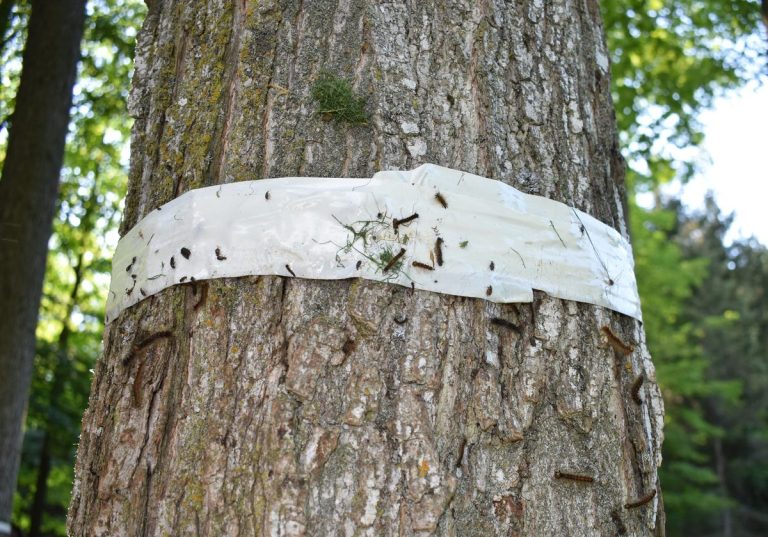
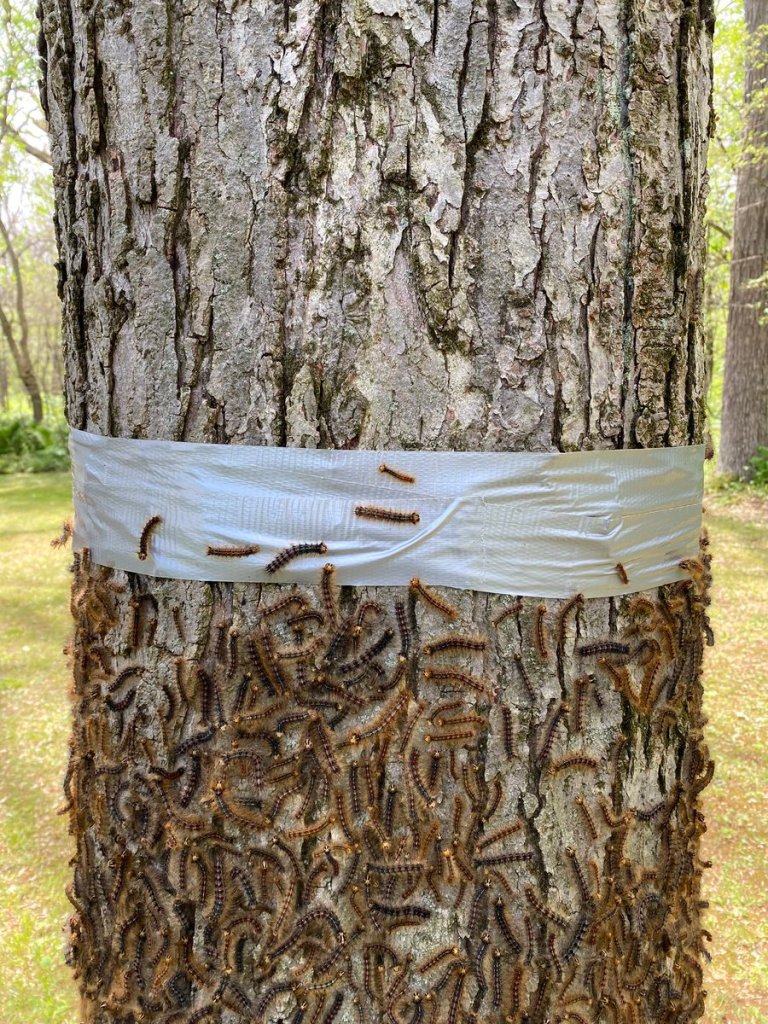
Crawling pests — cankerworm larvae, gypsy moth females, pecan weevils, ants tending aphids — must cross the trunk to reach the canopy. A properly installed band turns that choke point into a non-insecticidal barrier with zero spray residue and no effect on pollinators. Sloppy installation leaves gaps and wrinkles that pests exploit within days; field programs in apple, citrus, pecan and stone fruit orchards consistently report that a tight, correctly positioned band outperforms a loose one by a wide margin — professional buyers treat application procedure as part of the product spec.
Material & Tool Checklist
Standard substrates are PE (most popular for export), CPP (coloured options for selective attraction) and PET (premium transparency). Coatings: single-sided, double-sided or interval; release paper protects the adhesive during transport and is optional at installation.
| Orchard / crop type | Recommended band specification |
|---|---|
| Apple, pear (smooth bark) | PE, 10 cm, single- or double-sided, 50–100 m rolls |
| Walnut, pecan (thick bark) | Heavy-duty PE, 15 cm, interval coating, release paper |
| Citrus (mandarin, orange) | CPP yellow, 10 cm, double-sided, ant + aphid programs |
| Vineyards & berries | CPP coloured, 5 cm, discreet low-profile band |
| Greenhouse / nursery liners | Light PE, 5 cm, single-sided, fast application |
| Urban forestry (SLF, processionary) | PET transparent or black, 10–15 cm, UV-stable |
Tools needed: clean cloth or brush, scissors or tape cutter, gloves and optionally staples or twine for rough-bark trees. No chemicals, no spray equipment — that is the point of a physical barrier.

Step-by-Step Installation
1. Prepare the trunk surface
Brush away loose bark, moss and old spray residue in a 15–20 cm band zone. Rough bark is the number one cause of gaps — insects crawl under loose flakes. For thick-bark species, smooth the zone or use a wider band with interval coating so the adhesive bridges the ridges.
2. Set the correct band height
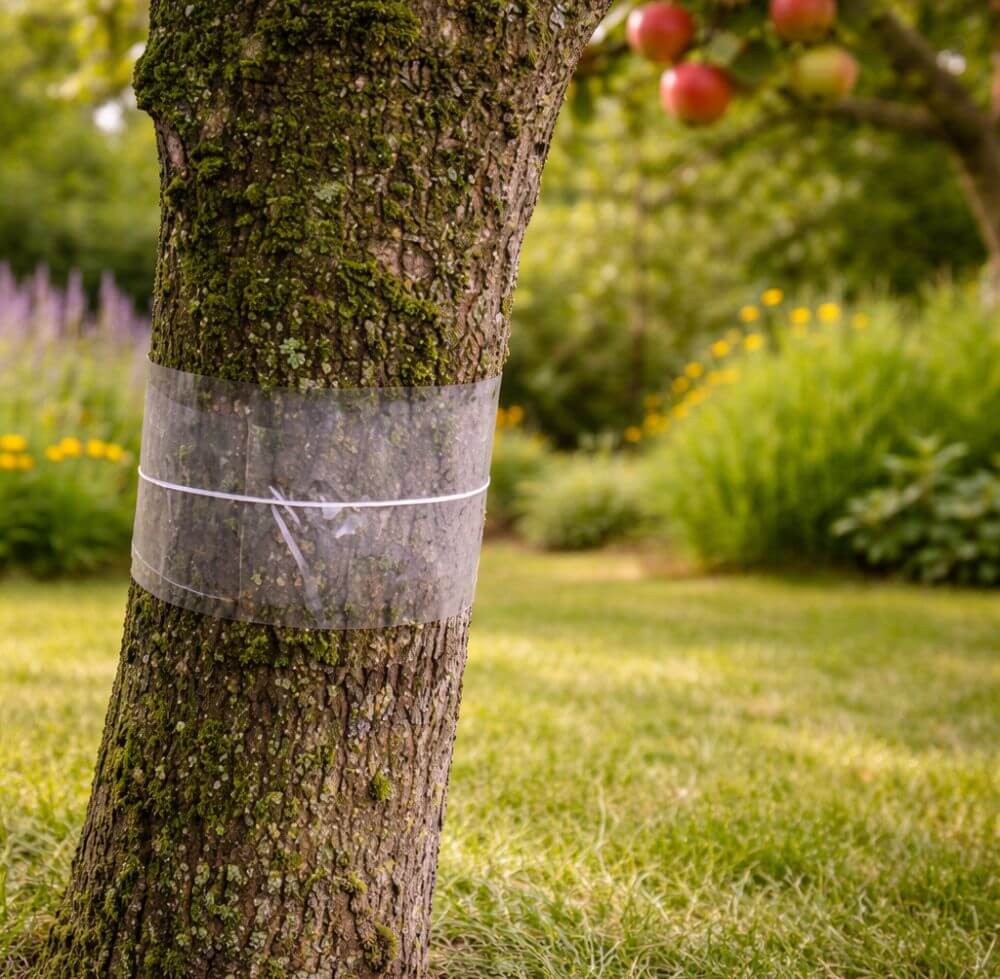
Standard practice is 30–50 cm above ground, above the graft union and below the first scaffold branch. This stays clear of splash and weed contact that can soil the adhesive, while remaining low enough to intercept wingless females and larvae emerging from the soil. Keep height consistent across the block so monitoring data stays comparable.
3. Wrap with tension and overlap
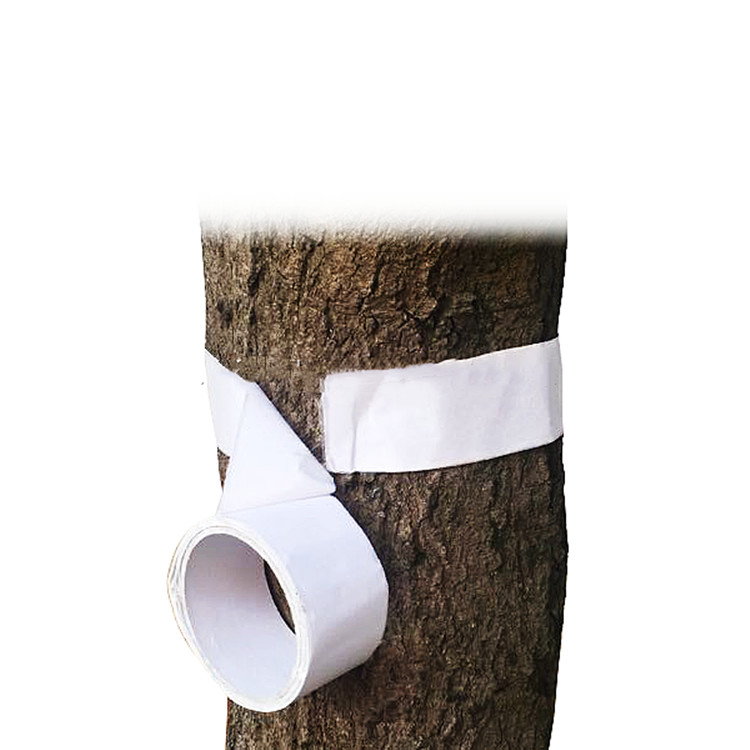
Hold the roll taut and wrap with a 50% overlap, angled slightly upward so rain sheds off. Overlap the starting end by at least 5 cm. On smooth bark the adhesive bonds directly; on rough bark, fix the top and bottom edges with staples or twine so wind cannot lift the band.
4. Seal the seam
Press the final turn firmly onto the previous layer to close the seam. Double-sided tape catches from both directions, so an unsealed edge is a highway for ants. Run a gloved finger along the circumference to check for bubbles or lifted edges.
5. Log the installation date
Note the date, block and band position on the orchard map. UV resistance of 90 days covers a typical crawler window and a written log tells you when to inspect, refresh or remove the band. Distributors can include a log sheet with bulk orders — a small touch that improves reorder rates.
Seasonal Timing & Maintenance
Timing depends on target pest and region: cankerworm and gypsy moth programs band before spring emergence; pecan weevil programs band in late summer; ant-and-aphid protection in citrus is most valuable through the spring flush. Bands stay effective for 90 days of active tackiness from −15 °C to 60 °C, with anti-aging verified at 72 hours under a 100 W UV lamp. Inspect monthly and replace when the adhesive is saturated with trapped insects. At season end, remove and dispose of used bands so overwintering insects cannot shelter in the adhesive.
| Pest program | Band window | Inspection |
|---|---|---|
| Cankerworm / gypsy moth | Late winter – early spring | Monthly |
| Pecan weevil / casebearer | Late summer | Every 2–3 weeks |
| Ant – aphid (citrus) | Spring flush | Monthly |
| Winter moth (Europe) | Early autumn – winter | Monthly |
Five Installation Mistakes to Avoid
| Mistake | Result | Fix |
|---|---|---|
| Wrapping over loose bark or moss | Gaps let pests crawl under | Brush and smooth the zone first |
| Band too loose or wrinkled | Pests walk under wrinkles; band peels | Wrap taut with 50% overlap |
| Seam left unsealed | Ants enter through the edge | Press final turn closed; staple rough bark |
| Band too low (mud/splash contact) | Adhesive soils and loses tack | Install 30–50 cm above ground |
| Install once, never inspect | Saturated band stops catching | Monthly inspection + log sheet |
Specifications for Wholesale & OEM Buyers
| Parameter | Value |
|---|---|
| Substrate | PE / CPP / PET, 7–150 mil (0.18–3.8 mm) |
| Adhesive viscosity | 700–1200 mPa·s (low-drip, outdoor-stable) |
| UV resistance | 90 days active tackiness outdoors |
| Temperature range | −15 °C to 60 °C |
| Peel strength | ≥ 15 N/25 mm (industrial grade, 180°) |
| Roll length | 2–200 m (50 m small orchard; 100–200 m commercial) |
| Width | 5–15 cm standard, custom available |
| Coating | Single / double / interval; release paper optional |
| Compliance | Quality-controlled production facility, CE conformity documented, REACH/RoHS, MSDS, CNAS lab reports |
OEM and private-label programs are available — custom width, colour, roll length, printed branding and packaging. MOQ is 500 pieces for OEM orders; samples ship within 2 days and tooling takes about 7 days. Contact us for pricing on wholesale and OEM quantities.
Frequently Asked Questions
How high should tree banding tape be installed?
Standard practice is 30–50 cm above ground, above the graft union and below the first scaffold branch. Keep the height consistent across the block.
How long does the tape stay effective outdoors?
The adhesive maintains active tackiness for 90 days in full sun, from −15 °C to 60 °C. Replace when saturated with trapped insects or at the end of the pest window.
Can the band be reused next season?
No — remove and dispose of used bands at season end. Fresh adhesive guarantees full catch performance and avoids overwintering pests sheltering in the old band.
Does banding hurt pollinators or beneficial insects?
No. The barrier targets crawling pests on the trunk only; pollinators and most natural enemies stay in the canopy and never contact the adhesive. The product is non-insecticidal and compliant with regulation.
What is the minimum order for wholesale and OEM?
MOQ is 500 pieces for OEM orders; larger annual contracts are quoted by volume. Contact us for pricing on bulk rolls, mixed SKU containers and annual programs.
Which compliance documents come with bulk shipments?
Compliance documentation, CE conformity, REACH/RoHS declarations, MSDS, CNAS laboratory reports and the pesticide import/export licence are provided with each containerized order.
Contact Shandong NongZhiWang Agricultural Technology Co., Ltd. (山东农之望农业科技有限公司)
+86 155 5018 1368
+86 186 6080 2692
+86 188 5516 6509
+86 155 5018 1368
keenfly100@gmail.com
wisetraps.com
Request a Quote or Free Sample
KEENFLY (Shandong NongZhiWang Agricultural Technology Co., Ltd.) makes this product in our own factory in Shandong, China. Wholesale, OEM and private label: send your target size, glue load, printed artwork and annual volume and we reply with the specification and quotation.
We reply within 24 hours.
WhatsApp: +86 155 5018 1368 / +86 186 6080 2692
WeChat: +86 188 5516 6509 / +86 155 5018 1368
Email: keenfly100@gmail.com


16 Comments