Cómo mejorar las tasas de supervivencia de las plantas: buenas prácticas para el uso de cubiertas protectoras contra las heladas
A medida que se acerca el invierno, el frío y las heladas suponen importantes retos para el crecimiento de las plantas. Durante esta estación, el uso de cubiertas antiescarcha para plantas es una medida de protección eficaz que puede mejorar considerablemente las tasas de supervivencia de las mismas. En este artículo se analizará la importancia de las cubiertas antiescarcha para plantas y se ofrecerán las mejores prácticas para ayudarte a protegerlas de forma eficaz…
Why Choose Plant Frost Covers?
Plant frost covers effectively block cold winds and frost, creating a warm microclimate for plants. These covers are typically made from thick, breathable materials, providing excellent insulation while ensuring adequate air circulation for the plants. By reducing temperature fluctuations around the plants, frost covers help maintain suitable growing temperatures, minimizing damage caused by low temperatures. Additionally, frost covers prevent snow from directly accumulating on plants, thereby reducing the risk of breakage and damage due to snow weight.

Best Practices for Using Plant Frost Covers
- Choose the Right Frost Cover
Select an appropriate frost cover based on the type, size, and growing environment of your plants. Ensure that the cover is made from high-quality, thick materials with good breathability to protect the plants while preventing excessive moisture buildup. - Cover Early
When weather forecasts predict frost or low temperatures, make sure to cover your plants in advance. The best time to do this is before nighttime temperatures drop, ensuring effective protection against the impending cold. This proactive measure can greatly reduce the risk of cold air damaging your plants. - Ensure a Snug Fit
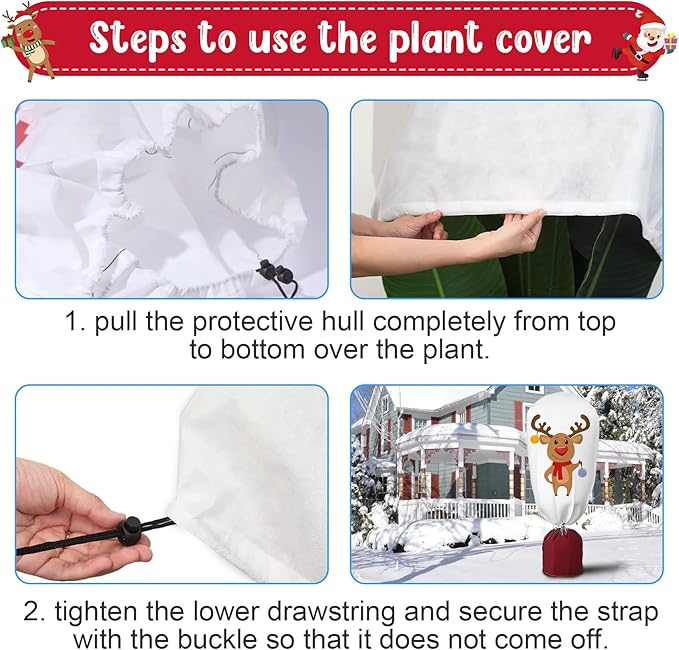
Use zippers, drawstrings, or elastic bands to tightly secure the frost cover around the plants, preventing cold winds from entering. You can also use stones or weights around the edges of the cover to enhance stability, ensuring it stays in place during windy conditions. This secure fitting can significantly enhance the protective effect of the cover. - Regularly Check Internal Conditions
Periodically check the temperature and humidity inside the cover to ensure that plants do not become too damp and rot. On warmer days, you can slightly open the cover to promote air circulation, reducing the risk of moisture accumulation. Regular checks not only contribute to plant health but also help you identify potential issues early on. - Remove the Cover Promptly
As spring arrives, make sure to remove the frost cover in a timely manner to prevent overheating of the plants. Gradually allow the plants to acclimate to the external environment, minimizing temperature shock and helping them adjust to new growing conditions. Keep an eye on weather changes to ensure that you remove the protection at the appropriate time.
Conclusión
Plant frost covers are a simple yet effective tool that can significantly increase plant survival rates during the cold winter months. By selecting and using frost covers appropriately, you can protect your plants from the adverse effects of low temperatures and frost, ensuring they thrive and revive healthily in spring. Make the most of this protective measure, and let your plants flourish throughout the seasons. Whether in your home garden or outdoor landscapes, using frost covers is a crucial strategy for maintaining healthy plant growth.