Tree Banding Tape for School Grounds | Shandong NongZhiWang
Institutional grounds teams need healthy specimen trees beside playgrounds, entrances and wards — with fewer pesticide applications around occupied buildings. Tree banding tape, the crawler barrier ribbon used in orchards and nurseries, gives those sites a physical trunk barrier that needs no canopy spray.
Why Grounds Teams Are Rethinking Trunk Sprays
A trunk or canopy spray on a campus tree adds re-entry planning, signage and paperwork to a routine work order, so institutional IPM programmes increasingly ask for non-spray options first and reserve treatment for cases where monitoring shows it is needed.
The pests that climb trunks are the recurring case: aphid and scale crawlers moving up from the bark, ants following the same routes to tend honeydew-producing insects, and inchworm larvae climbing from the soil. All of them depend on one route, and that is the route a band intercepts.
What a Tree Banding Tape Barrier Does
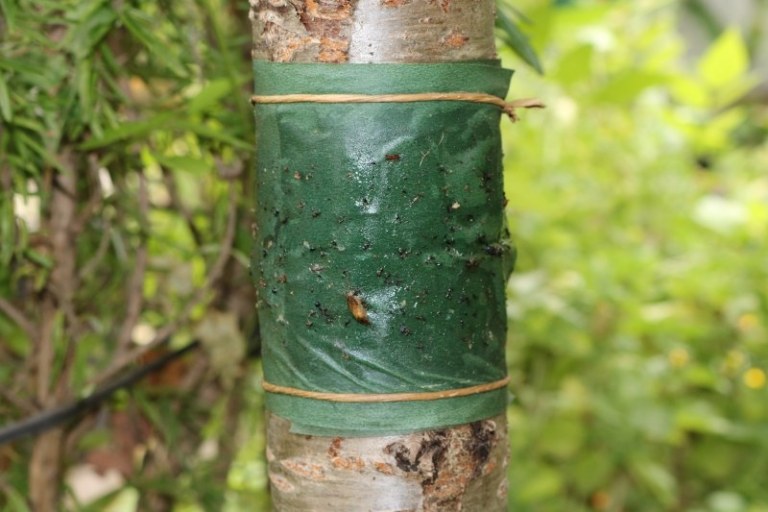
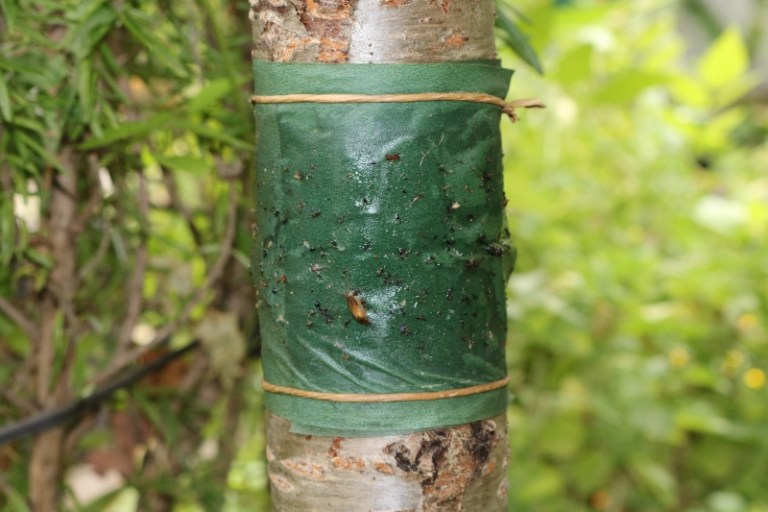
Tree banding tape is a pressure-sensitive adhesive layer on a backing film, wrapped around the trunk so crawling insects meet the tacky surface before they reach the branches. It needs no pump equipment, no mixing and no drift, and nothing is released into the air or soil around the tree.
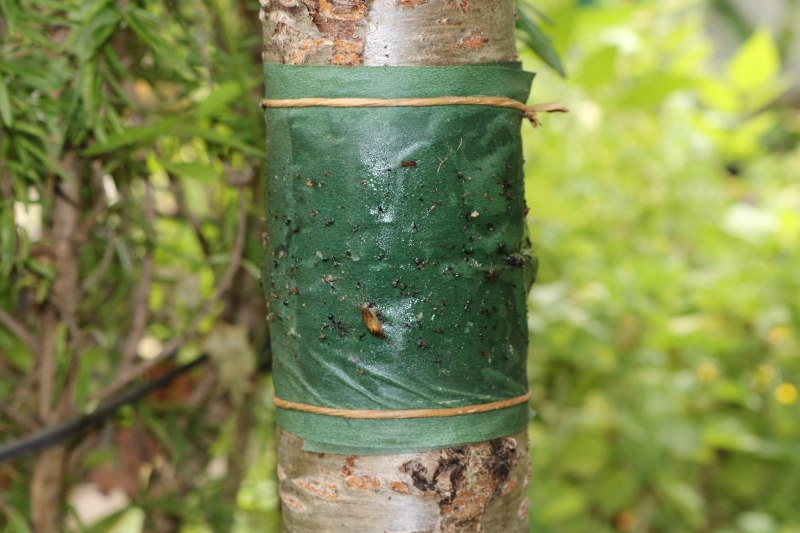
Because it is a single band, crews decide where it sits — away from handrails, entrances and play areas, and only on trees scouting has flagged. Removal is simple: cut it off, collect it with normal site waste and log the tree.
Where Banding Fits in a Campus IPM Programme
Banding tape is a barrier, not a monitoring system, so it sits alongside the scouting your team already does. Walk the trees on a fixed schedule, note where crawlers or honeydew activity appear, apply bands on the routes being used, and record which trees were treated and when — that record is what an IPM coordinator or auditor will ask to see.
Timing follows the local pest calendar: bands placed before the main climbing period give the longest unattended run, while mid-season applications answer what scouting has just found.
What to Specify in Your RFQ
Wholesale buying goes smoothly when the specification is written down before the first enquiry. These are the items buyers normally confirm with the factory:
| Item to specify | Why it matters to your programme |
|---|---|
| Roll width and roll length | Matches trunk size and trees covered per crew day |
| Adhesive tack level | Matches your local dust, rain and temperature range |
| Backing and finish | Affects handling while wrapping and how the band sits on bark |
| Carton, labelling and print | Needed for warehouse handling and goods-in checks |
| Private label packaging | Lets distributors and contractors supply under their own brand |
| Documentation required | Whatever your IPM file, tender or buyer audit expects |
Send the list with your application and destination — we reply with a specification sheet, and terms are agreed case by case. Contact us with the details.
Deployment Notes for Grounds Crews
Three habits keep a banding programme tidy: prepare the bark zone so the band sits evenly instead of bridging over loose flakes; keep it continuous, because an unsealed gap is an open lane; and log the application date on the site map.
Inspect bands on the same route as your other IPM checks: dust and debris build up on exposed adhesive outdoors, and the inspection shows when a band is due for replacement rather than leaving that to guesswork.
Supply Programmes for Distributors and Facility Management Buyers
Shandong NongZhiWang Agricultural Technology Co., Ltd. (山东农之望农业科技有限公司) manufactures tree banding tape and crawler barrier ribbon for wholesale and OEM buyers. Facility management distributors, landscaping supply houses, grounds contractors and institutional procurement teams order bulk rolls for recurring programmes, and private label is available for buyers building their own range.
Typical buyers include school district suppliers, hospital and care-sector procurement, municipal forestry teams, arborist distributors and PCO wholesalers. Tell us the application, estimated annual volume and destination, and we reply with a specification sheet and terms.
Frequently Asked Questions
Q1. What is tree banding tape used for on institutional grounds?
A: It forms a sticky band around the trunk that intercepts crawling insects — aphid and scale crawlers, climbing ants and trunk-climbing larvae — before they reach the canopy beside buildings, paths and play areas.
Q2. Does it replace our existing spray programme?
A: No. It is a physical barrier added to an IPM programme, used to reduce trunk and canopy treatments. Scouting still decides whether treatment is needed at all.
Q3. Is it appropriate around children, patients and residents?
A: It is applied as a band on the trunk rather than sprayed into air or soil, which is why teams managing occupied buildings consider it. Each site should run its own risk assessment and follow the installation guidance.
Q4. How do we choose the right roll for our trees?
A: Send the trunk sizes you deal with, the site conditions and the target pest, and we match a roll width, roll length and tack level to that brief.
Q5. Can you supply under our own brand?
A: Private label, custom print, carton and labelling are part of our OEM programme. Send your artwork and packaging requirements and we confirm what is feasible.
Q6. How do we start before committing to a full programme?
A: Share the specification, the number of trees and the destination, and contact us to discuss a sample or trial order. Ongoing terms are agreed with the same contact.
Contact Shandong NongZhiWang
Factory-direct supply of tree banding tape, crawler barrier ribbon and orchard pest supplies wholesale — send your width, roll length and print requirement.
+86 155 5018 1368
WhatsApp 2
+86 186 6080 2692
+86 188 5516 6509
WeChat 2
+86 155 5018 1368
山东农之望农业科技有限公司 (Shandong NongZhiWang Agricultural Technology Co., Ltd.)
Related reading
- Tree banding tape for municipal forestry
- Tree banding tape for landscape contractors
- Tree banding tape for public parks