Tree Banding Tape for Spongy Moth | Shandong NongZhiWang
Why Spongy Moth Crawlers Are a Trunk Problem
Spongy moth (Lymantria dispar, formerly gypsy moth) is one of the most closely watched defoliators in North American forests, shelterbelts and urban shade tree programs. Egg masses overwinter on trunks, bark crevices, pallets and outdoor equipment. When spring temperatures rise, larvae hatch and immediately begin crawling up the trunk to reach the canopy, where they feed on more than 300 species of trees and shrubs — oaks, maples, birches and many fruit species among them.
That upward crawl is the point of intervention. A physical tree banding tape applied around the trunk intercepts small caterpillars before they reach the foliage. As a tree banding tape orchard wholesale manufacturer, Shandong NongZhiWang supplies this non-insecticidal crawler barrier ribbon to forestry programmes, tree care companies and distributors who need a barrier that can be installed quickly and left in place for weeks.
How the Sticky Band Intercepts Larvae
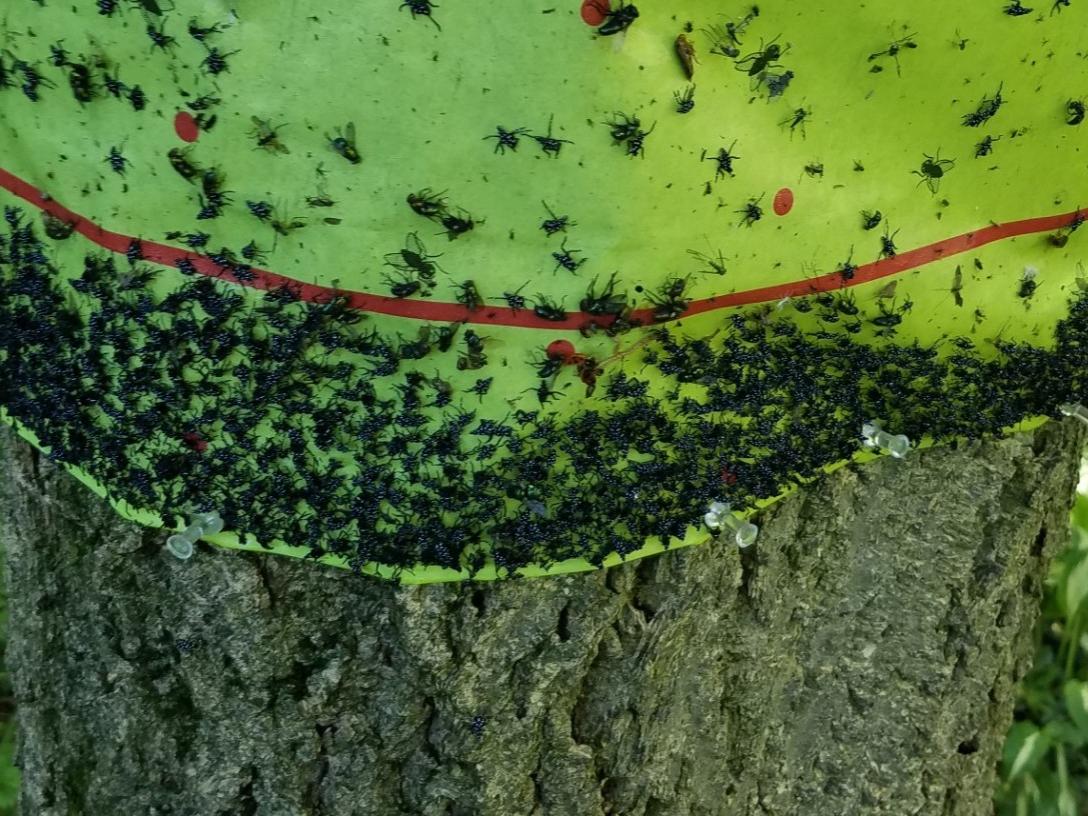
A band of double-sided adhesive film is wrapped around the circumference of the trunk at chest height. Caterpillars moving up the trunk — and later, adults and other crawling traffic moving down — contact the adhesive and are retained. University guidance in Wisconsin and Michigan notes that sticky barrier bands are most effective against small, freshly hatched caterpillars, and that bands should be put up before hatch begins in mid-spring.
Because the mode of action is mechanical rather than chemical, the band introduces no spray, no residue in the canopy and no re-entry interval for the treated stand. That matters on campuses, parks, golf routes and street trees where spraying is restricted or where guests, staff and wildlife are present throughout the season.
Standard Roll Specification (RFQ Basis)
| Item | Typical manufacturing range |
|---|---|
| Material | PE / CPP film, single-sided or double-sided adhesive |
| Width | 50–150 mm (crawler barrier widths for trunk banding) |
| Roll length | 20–100 m per roll; 2.5 / 5 / 7.6 cm core options |
| Glue tack | 700–1200 mPa·s (weatherable acrylic) |
| Operating range | −15 to 60 °C; outdoor UV exposure ≈ 90 days |
Width, length, core diameter, colour and packaging are confirmed against each order — request a quotation through the contact card below.
Fitting Banding Into a Season-Long Programme
Banding fits most naturally as one layer in a monitored programme. Field recommendations from state agencies generally follow the same sequence: remove or flatten egg masses on trunks in late winter; install sticky bands in late April or early May, before hatch; inspect bands weekly and clear accumulated debris; and around mid-June, when larvae are large enough to bypass a sticky surface, switch to a burlap band trap for continued monitoring and hand-picking. The tree banding tape installation guide covers band height, wrap tension and inspection intervals.
For plantation blocks, shelterbelts and rights-of-way, the same roll can be run along multiple stems without special tools, which keeps labour cost predictable for crews working long rows of trees.
Who Buys Tree Banding Tape in Bulk
- Municipal and county forestry teams responsible for shade tree inventories and park woodlots.
- Tree care and arborist service companies bundling banding into seasonal contracts.
- Suppliers serving forestry pest management supplies wholesale and landscaping pest control products wholesale channels.
- Importers and wholesale buyers looking for tree banding tape wholesale programmes, private label and OEM cartons.
- Agricultural cooperatives and estate managers combining orchard banding tape with orchard pest control products wholesale and broader agricultural pest control products wholesale orders.
Orders are quoted by container or pallet volume with artwork, carton marking and language options handled in-house. Tell us your target market, roll size and annual volume and our team will return a specification sheet and quotation — see tree banding tape wholesale specifications.
FAQ
Q1. When should bands be installed for spongy moth?
A: Install sticky bands before larvae hatch in mid-spring — extension programmes in the region typically suggest late April to early May, placed around the trunk about chest height.
Q2. Are bands effective once caterpillars reach the canopy?
A: Sticky surfaces perform most strongly on small, young caterpillars. Larger larvae are handled more effectively with a burlap band trap added later in the season, so banding is used early and combined with other monitoring steps.
Q3. Does the tape contain insecticide?
A: No. It is a physical adhesive barrier, so there is no spray residue in the canopy and no chemical application to the stand.
Q4. What widths and lengths can you supply?
A: Standard widths are 50–150 mm in 20–100 m rolls, with double-sided or single-sided adhesive, custom cores, colours and private label packaging available on request.
Q5. Can you support container-volume or OEM orders?
A: Yes. We manufacture tree banding tape in bulk and supply distributors, importers and programme owners with wholesale and OEM terms. Share your annual volume and destination market for a quotation.
Q6. How do I get samples and a quotation?
A: Contact us with your roll size and estimated volume. Samples and a formal quotation are arranged directly by our sales team.
Shandong NongZhiWang Agricultural Technology Co., Ltd. (山东农之望农业科技有限公司)
- WhatsApp: +86 155 5018 1368 / +86 186 6080 2692
- WeChat: +86 188 5516 6509 / +86 155 5018 1368
- Email: keenfly100@gmail.com
- Website: wisetraps.com
For wholesale, OEM and distributor enquiries about tree banding tape, contact us for a quotation.
Related Posts
- Tree Banding Tape for Forestry Pest Monitoring
- Tree Banding Tape for Municipal Forestry
- Tree Banding Tape Installation Guide