[DE] Physische Schädlingsbekämpfung IPM
Physische Schädlingsbekämpfung IPM
Technischer Bericht für den deutschen Markt.
## Introduction: The Shift from Reactive to Proactive IPM
In the industrial sector—ranging from pharmaceutical manufacturing to high-end electronics assembly—pest control is not a luxury; it is a critical component of Quality Assurance (QA). A single fly in a cleanroom can lead to batch rejection and millions of dollars in losses. Traditionally, industrial Integrated Pest Management (IPM) relied heavily on scheduled chemical treatments. However, with increasing environmental regulations and the strict „Zero-Pesticide“ requirements of many manufacturing standards, the focus has shifted toward physical interception.
This case study examines the integration of physical traps—specifically high-output ILTs and Visco-Lock glue boards—into the IPM program of a major food processing facility in Shandong, China.
## The Challenge: A High-Pressure Environment
The facility in question is a 50,000-square-meter grain processing plant. The primary challenges included:
– **High Dust Levels**: Flour and grain dust were quickly coating traditional glue traps, rendering them ineffective within days.
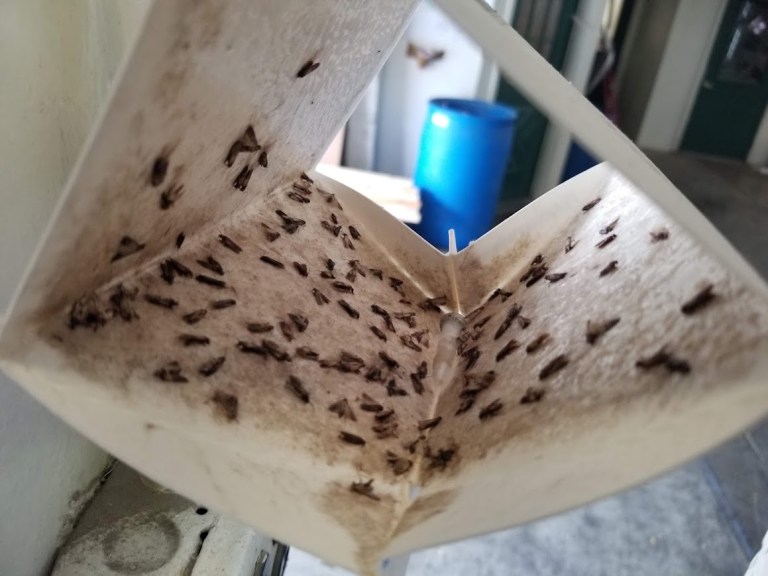
– **Constant Pest Pressure**: The facility’s proximity to agricultural land meant a constant influx of House Flies and Indian Meal Moths.
– **Stringent Audits**: The plant had to comply with both domestic food safety standards and international export requirements (BRC and AIB).
Before the integration of professional physical traps, the plant was relying on generic, low-gsm glue boards that warped under the heat of older UV lamps and a monthly „fogging“ schedule that was increasingly viewed as a liability by the QA department.
## The Strategy: The Three-Layer Defense System
Our factory worked with the facility’s IPM provider to design a „Three-Layer Physical Defense System“ centered on high-spec hardware.
### Layer 1: Perimeter Interception
We deployed 400 „Orchard Fly Balls“ around the external perimeter of the loading docks and grain silos. These weatherproof spheres were placed at 5-meter intervals. The goal was to reduce the overall pest population in the immediate vicinity of the building, thereby reducing the „Infiltration Pressure“ on the doors.
### Layer 2: Transition Zone Capture
At all entry points (personnel doors and loading docks), we installed „High-Lumen“ UV-A traps equipped with our 400gsm moisture-resistant glue boards. These traps were positioned at a height of 1.8 meters, „interceptively“—meaning they were placed to the side of the door, visible to insects as they entered but not visible from the outside (to avoid attracting more pests in).
### Layer 3: Critical Production Zone Monitoring
Inside the actual processing rooms, we utilized „Silent Capture“ ILTs. These units used black 400gsm glue boards with a printed monitoring grid. This allowed the facility’s pest control technician to not only capture insects but to perform a weekly „Count and Identify“ routine. By identifying whether the catch was a House Fly (external source) or a Grain Moth (internal source), the plant could pinpoint the exact failure in their structural integrity or raw material handling.
## The Results: Data-Driven Success
After six months of the integrated program, the facility saw the following results:
1. **80% Reduction in Internal Pest Sightings**: The combination of perimeter balls and entry-zone ILTs drastically reduced the number of insects reaching the production floor.
2. **50% Reduction in Chemical Usage**: The „fogging“ frequency was reduced from monthly to quarterly, as the physical traps were now doing the heavy lifting.
3. **Audit Compliance**: During a major BRC audit, the facility received a „Grade A“ rating. The auditors specifically noted the precision of the pest monitoring grid on the glue boards as a best-practice example of data-driven IPM.
4. **Maintenance Efficiency**: By moving from 250gsm to 400gsm substrates, the „replacement labor“ was reduced by 30%. The boards stayed flat and sticky for the full 30-day service cycle, even in the dusty environment.
## The Factory Floor Perspective: Customization is Key
One of the reasons this case study was successful was the ability to customize the hardware. In the high-dust processing zones, we provided „Extra-Tack“ Visco-Lock boards. These boards have a 60gsm adhesive coating (compared to the standard 40gsm) to ensure that even if the board is partially covered in dust, there is enough „liquid depth“ in the glue to capture a landing insect.
In the cleanroom areas, we provided „Low-VOC“ adhesives. Some standard hot-melt glues can release trace amounts of volatile organic compounds when heated by the UV lamps—a potential contaminant in sensitive labs. Our Low-VOC formulation ensured that the pest control program did not compromise the air quality of the production environment.
## Conclusion: Physical Traps as a Cornerstone of Industry
This case study demonstrates that physical traps are no longer just „add-ons“ to an IPM program; they are the foundation. When engineered with the right technical density—400gsm substrates, UV-stable adhesives and strategic deployment—they provide a level of reliability and data transparency that chemical treatments simply cannot match.
### Physical Trap Installation & Maintenance SOP
1. **Site Inspection**: Identify peak fly activity zones (near light sources or entry points).
2. **Mounting height**: For UV lamps, install 1.5m-2m from floor level.
3. **Glue Board Placement**: Ensure the Visco-Lock side is facing the UV source.
4. **Replacement Cycle**: Swap every 30-60 days or when 70% coverage is reached.
5. **Manufacturer Logistics**: For technical support or bulk custom substrate orders, contact our factory floor.
**Address**: 500m North of Intersection of Shandong Road & Changjiang Road, West Side, Jizhuang Village, Qinghe Subdistrict, Cao County, Heze, Shandong, China.
━━━━━━━━━━━━━━━━━━━━━━━━━━
📞 Contact Our Factory Direct
Shandong Nongzhiwang Agricultural Technology Co., Ltd.
Brand: KEENFLY | 10,000m² Factory | 25+ Machines
CE · EPA · REACH documents on request
WhatsApp: +86 155 5018 1368 / +86 186 6080 2692
WeChat: +86 155 5018 1368 / +86 188 5516 6509
Email: keenfly100@gmail.com
Website: wisetraps.com
Factory Address: 500m North of Intersection of Shandong Road & Changjiang Road, West Side, Jizhuang Village, Qinghe Subdistrict, Cao County, Heze, Shandong, China
MOQ 500 Units | Free Sample Available | OEM/ODM Welcome
━━━━━━━━━━━━━━━━━━━━━━━━━━
Angebots- oder Musteranfrage
KEENFLY (Shandong NongZhiWang Agricultural Technology Co., Ltd.) stellt dieses Produkt im eigenen Werk in Shandong, China her. Großhandel, OEM und Eigenmarke: nennen Sie Maß, Klebstoffmenge und Jahresvolumen, wir antworten mit Spezifikation und Angebot.
Wir antworten innerhalb von 24 Stunden.
WhatsApp: +86 155 5018 1368 / +86 186 6080 2692
WeChat: +86 188 5516 6509 / +86 155 5018 1368
E-Mail: keenfly100@gmail.com