Tree Banding Tape for Landscape Nurseries: Ornamental Tree Pest Protection
Landscape nurseries invest heavily in ornamental stock — Japanese maples, flowering cherries, magnolias, ornamental pears, and specimen oaks represent thousands of dollars per acre. When crawler insects, ants, and borers attack young nursery trees, the financial losses cascade through multiple growing seasons. Tree banding tape offers a physical, non-toxic barrier that protects high-value ornamental inventory without chemical residue on salable stock.
Why Landscape Nurseries Need Tree Banding Tape
Unlike commercial fruit orchards, landscape nurseries face unique pest pressure dynamics. Nursery stock sits in dense rows where pest populations migrate rapidly from tree to tree. The most damaging crawlers include:
- Scale insects — San Jose scale, oystershell scale, and euonymus scale crawl up trunks from soil litter to colonize branches
- Ants farming aphids — Ants protect aphid colonies on nursery ornamentals, spreading honeydew and sooty mold that ruins plant salability
- Borers — Peachtree borers and dogwood borers enter at the soil line; trunk banding disrupts their larval migration
- Spongy moth larvae — Young caterpillars crawl up trunks to feed on foliage; sticky bands trap them during ascent
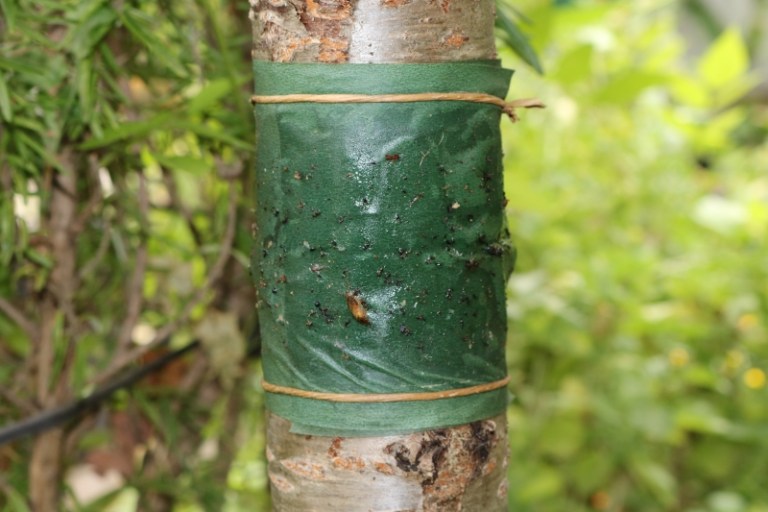
Tree banding tape creates an impassable adhesive barrier on the trunk. Crawlers cannot cross the sticky surface, breaking the pest cycle without spraying — a critical advantage for nurseries that sell to organic landscape contractors and municipal projects requiring chemical-free stock.
How to Apply Tree Banding Tape in a Nursery Setting
Proper installation maximizes barrier effectiveness and prevents tree damage:
- Measure trunk diameter — Wrap tape at 12–18 inches above soil level. For multi-stem ornamentals, band each stem individually.
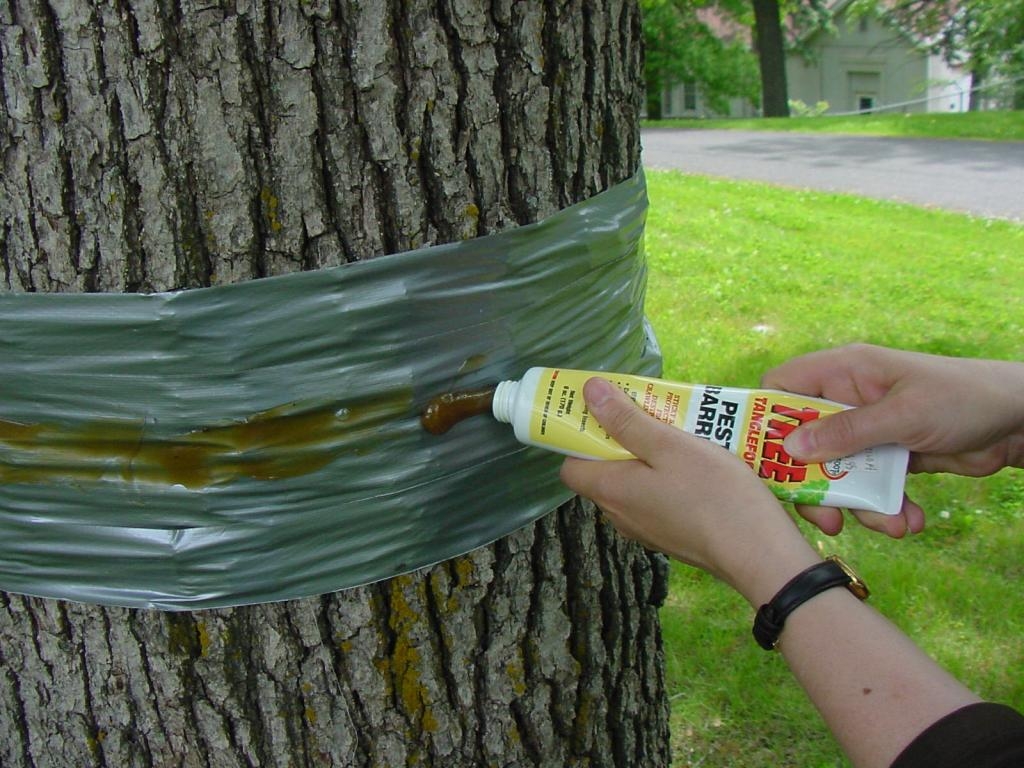
- Apply backing strip first — A plastic or aluminum foil backing prevents bark abrasion. Wrap the backing around the trunk, then apply the adhesive tape over it.
- Overlap ends by 1 inch — Ensure no gaps where crawlers could slip through.
- Replace every 90 days — Adhesive degrades under UV exposure. In high-UV regions, replace every 60 days during peak crawler season (April–September).
- Do not apply directly to bark — Always use a backing layer to prevent girdling, especially on thin-barked species like Japanese maples and flowering dogwoods.
For wholesale nursery operations, bulk tree banding tape rolls (typically 3–6 inches wide, 100–500 feet per roll) reduce per-unit cost significantly compared to pre-cut bands. OEM suppliers can custom-cut widths to match specific trunk diameter ranges common in nursery stock.
Wholesale Sourcing for Nursery Operations
Commercial nurseries purchasing tree banding tape in bulk benefit from direct factory sourcing:
- MOQ flexibility — Wholesale orders typically start at 1,000–5,000 rolls, with volume discounts at container-load quantities
- Custom specifications — Width (15mm–150mm), length (10m–500m per roll), adhesive tack level, and backing material can all be customized
- Private label packaging — Nursery chains and PCO service companies can co-brand packaging for resale
- Consistent supply — Chinese factory-direct suppliers maintain year-round production, avoiding seasonal shortages common with domestic distributors
Shandong NongZhiWang (山东农之望农业科技有限公司) manufactures tree banding tape with high-tack polymer adhesive specifically formulated for bark-safe application. Our production capacity supports both small nursery wholesale orders and large distributor programs.
FAQ
Q: Will tree banding tape damage ornamental tree bark?
A: When applied with a backing strip (plastic or foil), tree banding tape does not damage bark. Never apply adhesive directly to the trunk — the backing creates a protective layer while the adhesive faces outward to trap crawlers.
Q: How long does the adhesive remain effective in outdoor nursery conditions?
A: Standard polymer adhesive maintains effective tack for 90 days under moderate UV exposure. In high-UV or high-humidity environments, replace every 60 days. Peak effectiveness occurs during the first 60 days of application.
Q: Can tree banding tape be used on container-grown nursery stock?
A: Yes. For container nurseries, apply tape at the base of the trunk just above the root flare. This is especially effective against soil-dwelling crawlers that move from potting medium to trunk.
Q: What width should landscape nurseries use for ornamental trees?
A: For young ornamental trees (1–3 inch caliper), a 2-inch (50mm) width is standard. For larger specimen trees, 3–4 inch (75–100mm) widths provide better coverage. Custom widths are available for wholesale orders.
Q: Is tree banding tape compatible with organic nursery certification?
A: Yes. Tree banding tape is a physical barrier method with no chemical active ingredient. It is compatible with USDA organic, OMRI-listed, and IPM-certified nursery programs.
Q: Can I order custom-branded tree banding tape for my nursery chain?
A: Yes. We offer OEM/private label packaging with custom printing, roll dimensions, and adhesive specifications. Contact us for MOQ details and lead times.
Contact Shandong NongZhiWang
Tree banding tape manufacturer — wholesale, OEM, custom specs
| +86 155 5018 1368 | +86 186 6080 2692 | |
| +86 188 5516 6509 | +86 155 5018 1368 | |
| keenfly100@gmail.com | ||
| Website | wisetraps.com | |
Shandong NongZhiWang Agricultural Technology Co., Ltd. | 山东农之望农业科技有限公司