Tree Banding Tape for Sugarbushes: Caterpillar and Honeydew Ant Barrier | Shandong NongZhiWang
A sugarbush is a working crop stand: the same tapable maple trees are also the trees that forest tent caterpillars, cankerworms and spongy moth larvae climb every spring, and the trees whose aphids drip honeydew down onto the taps and buckets. Tree banding tape — supplied as crawler barrier ribbon for orchard and woodland buyers — puts one continuous sticky ring across that trunk route. For maple syrup producers, woodland consultants and buyers of forestry pest management supplies wholesale — alongside agricultural pest control products wholesale programs — it is a non-chemical element that fits an integrated pest management (IPM) program and residue-sensitive production.
What Climbs a Sugarbush Trunk
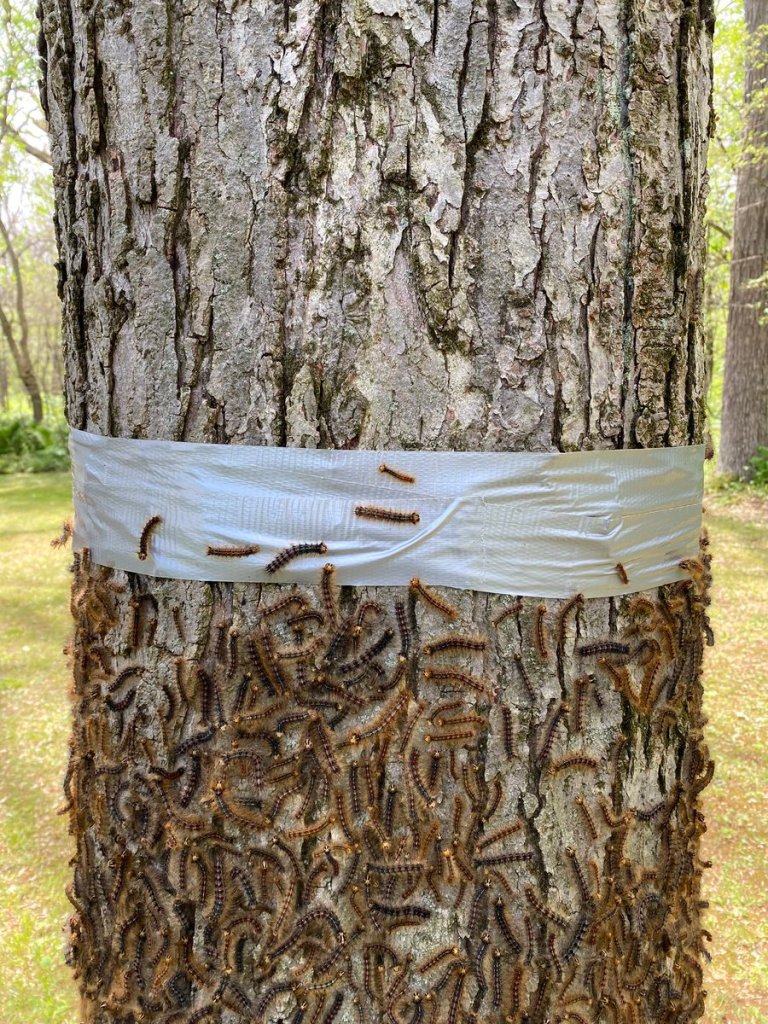
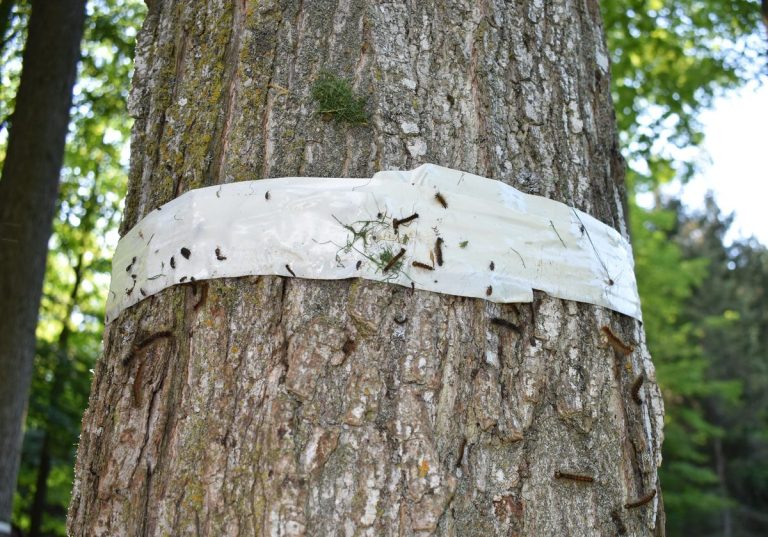
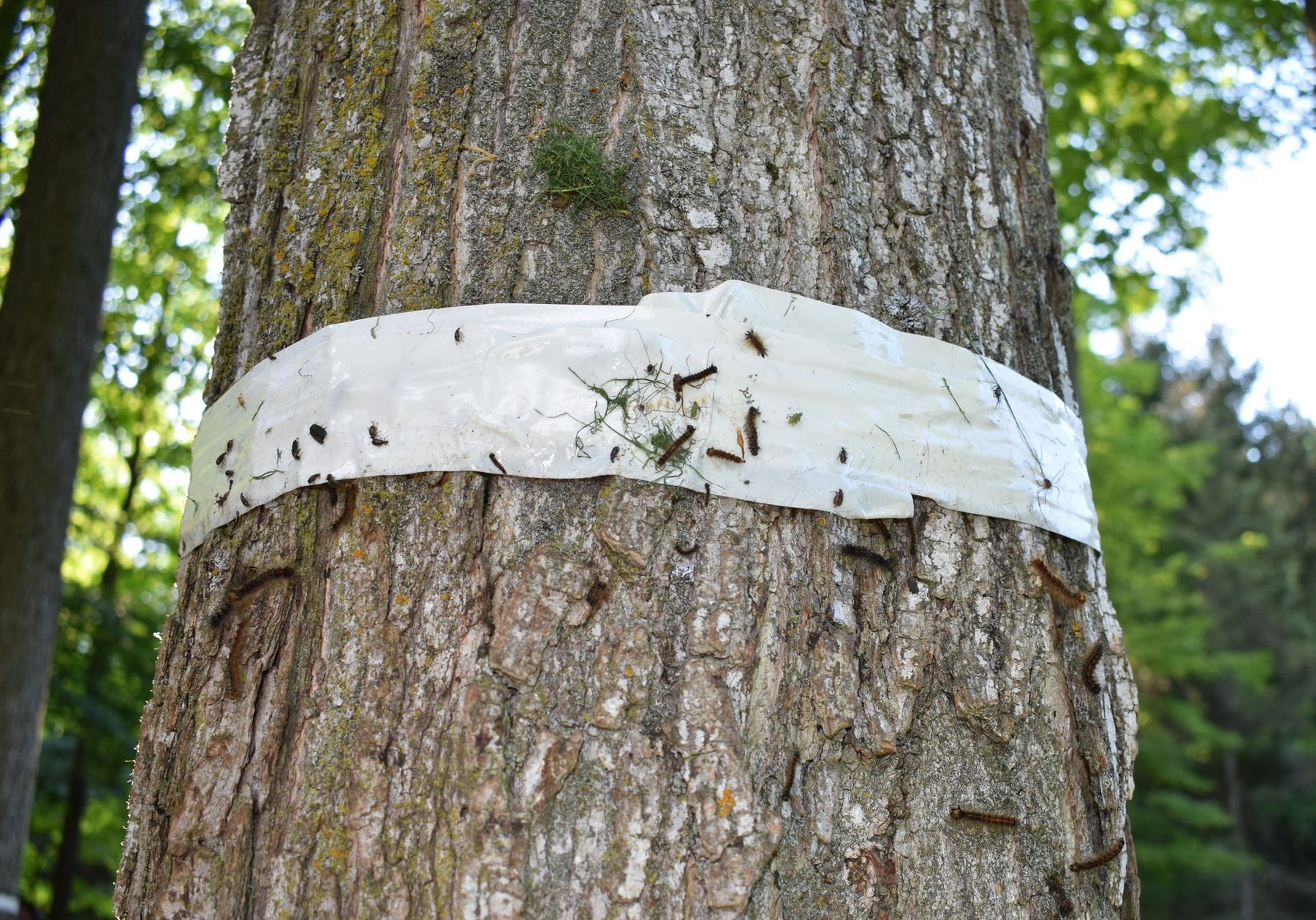
Forest tent caterpillars hatch in the canopy, feed, then move around the tree and aggregate on the trunk before dispersing; sticky or slippery bands around trunks are a recognised way to stop them crawling back up to the foliage. Spongy moth caterpillars behave the same way after hatching or ballooning, and extension services in the Great Lakes region recommend bands to reduce the number reaching the leaves. The band therefore works in both directions: it intercepts larvae moving up to feed and larvae moving down to rest or pupate.
The second group is the honeydew makers. Aphids and soft scales on maples excrete honeydew that attracts ants, which in turn protect those colonies, and the sticky fallout is a familiar complaint on buckets, lids and work surfaces. A trunk band interrupts the ant highway without spraying the tapping zone, which matters in a stand where sap is collected and evaporation happens outdoors.
Placement That Holds Up in a Real Stand
- Band before the climbers start: after egg hatch in late spring for tent caterpillars, and before the autumn flight for species that overwinter as eggs, so the barrier is in place for the first upward crawl.
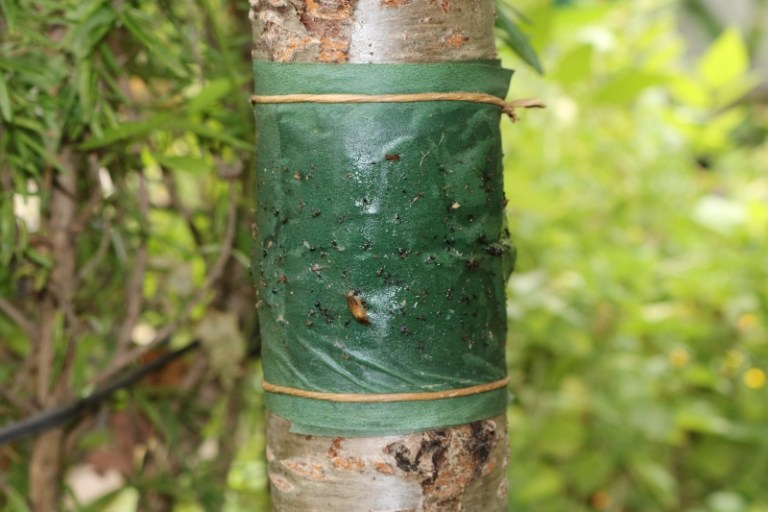
- Set the band about 1.2–1.5 m above the ground on a straight section of trunk, where one roll width covers the full circumference with a small seam overlap.
- Never press adhesive straight onto bark. Apply to a backing or collar so the tape can be removed with the season’s litter, and take bands down after the crawl period.
- Close the bridges first: prune low branches touching the ground, keep grass mown around the stem, and band every access trunk in the block, not only the damaged trees.
- Scout alongside the band. Counts on the tape double as a monitoring record for crawler flush and caterpillar activity, which is what you schedule other controls against.
What to Specify When You Buy Wholesale
Sugarbush trees vary from slender maples tapped for the first time to old trunks well over 30 cm across, so roll width and length matter more than a single SKU. As tree banding tape wholesale supply, standard runs 50–150 mm wide and 20–100 m per roll, single- or double-sided, on 2.5 cm, 5 cm or 7.6 cm cores, with adhesive in the 700–1200 mPa·s range and coating weight 30–600 g/m². Rated performance covers −15 °C to 60 °C with roughly 90 days of UV service life, which covers a full season outdoors. Film base is PE or CPP at 0.07–1.5 mm thickness, and printed core marks or width codes can be added for your own labelling. Send trunk diameters, block area and renewal plan, and we will return rolls per stand with an allowance for seams and mid-season replacement.
A Supply Program, Not a One-Off Roll
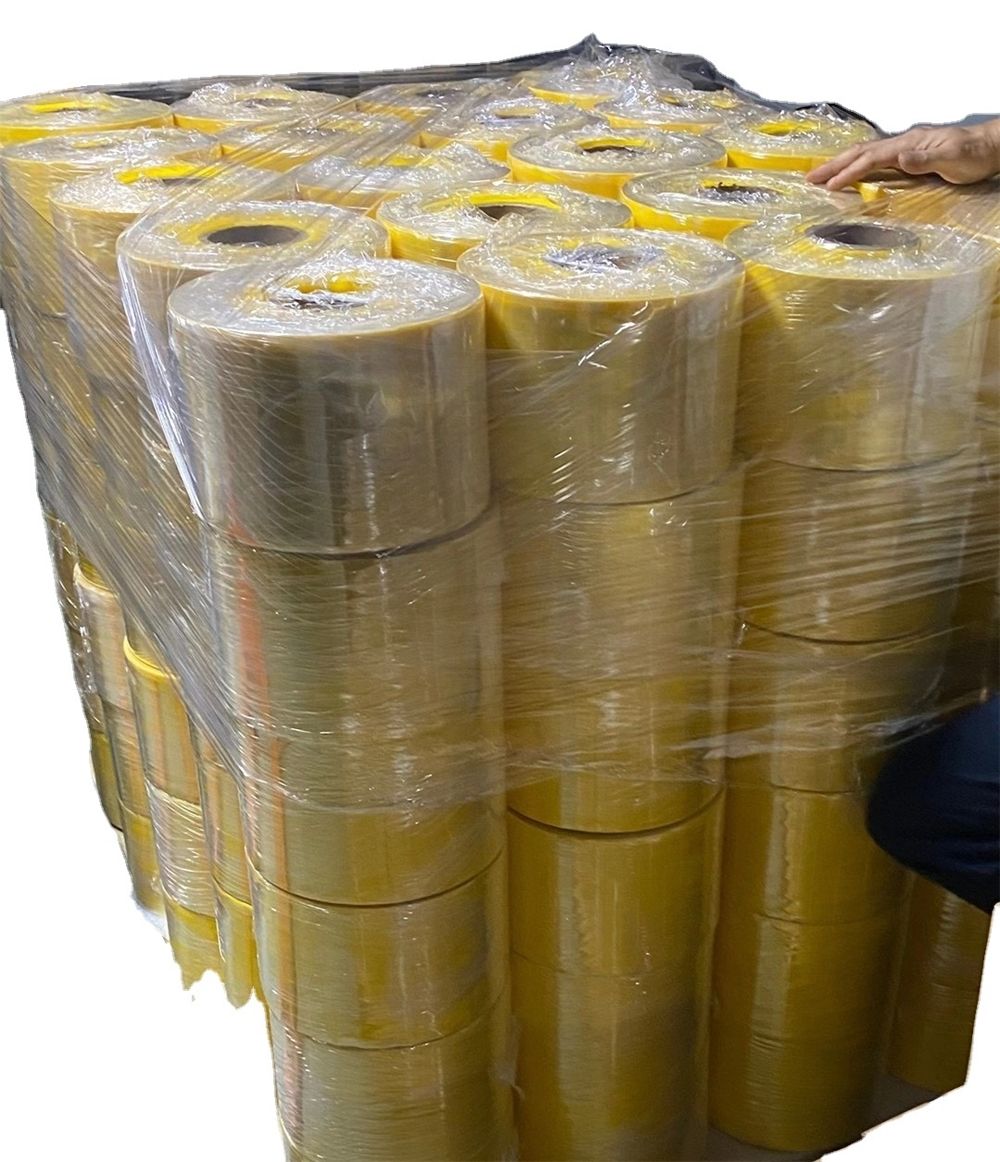
Most sugarbush orders arrive as a season kit: a main quantity for installation before the spring crawl, a smaller top-up for wet periods when debris reduces tack, and a labelled pallet for the shed. We supply under your own brand with printed logo, custom cartons and barcode-ready packing, and we hold the same specification across shipments so last season’s tape and this season’s tape perform the same way. Pricing is quoted per enquiry against width, roll length, quantity and destination port — contact us and we will answer with slot, MOQ and freight together.
FAQ
Will the tape harm maple bark or affect sap?
Used with a backing or collar and removed after the crawl period, it sits on the outside of the bark and does not contact sap. Do not apply adhesive directly to the trunk.
When should bands go up in a sugarbush?
Before the first upward crawl: after egg hatch in spring, and before the autumn flight for overwintering species. Early installation is what makes the barrier effective.
How much tape does a stand need?
It depends on trunk diameter, tree count, ground-contact branches and how many renewal points you plan. Send the stand map and we will calculate rolls with a seam allowance.
Does it replace spraying?
It does not claim to. Bands are a mechanical, non-chemical component of an IPM program, and the tape counts also support monitoring decisions.
Can you supply our brand and packaging?
Yes: printed logo, custom labelling, retail or bulk packaging and barcode-ready cartons. Send artwork and pack format and we will confirm the MOQ.
How should a producer order for the season?
Order ahead of installation with width, roll length, quantity and destination port for one reply covering slot and freight.
Contact Shandong NongZhiWang
Planning a banding program for your sugarbush, maple woodlot or mixed woodland? Contact us for wholesale offers, samples and custom specifications.
| +86 155 5018 1368 | |
| +86 186 6080 2692 | |
| +86 188 5516 6509 | |
| +86 155 5018 1368 | |
| keenfly100@gmail.com | |
| Website | wisetraps.com |
Shandong NongZhiWang Agricultural Technology Co., Ltd. (山东农之望农业科技有限公司)
Recommended Products
- Yellow Tree Banding Tape 10 cm × 30 m — Orchard Crawler Barrier
- Black Tree Banding Tape 10 cm × 100 m — Crawler Barrier Ribbon
- Non-Toxic Tree Banding Tape — Crawler Barrier for Orchard and Forestry