Tree Banding Tape for Nursery Stock Shipping: PhytoSanitary Wholesale Guide
Quick answer: Nursery operators shipping live trees across state lines or international borders face a persistent threat: crawling insects that hitchhike on trunks, branches, and root balls.
Nursery operators shipping live trees across state lines or international borders face a persistent threat: crawling insects that hitchhike on trunks, branches, and root balls. A single infestation discovered at a quarantine checkpoint means rejected shipments, fumigation costs, and damaged buyer trust. Tree banding tape — a self-adhesive sticky barrier applied to trunks and stems — is the most cost-effective physical control method to keep crawler-stage pests off nursery stock during holding, staging, and transit.
For wholesale nursery buyers, distributor networks, and phytosanitary compliance managers, tree banding tape offers a chemical-free solution that meets USDA APHIS and EU plant passport requirements while protecting margins on high-value ornamental and fruit tree stock.

Why Nursery Stock Requires Physical Pest Barriers
Young trees in nursery fields and holding yards are especially vulnerable to crawling pests. Scale crawlers, aphid nymphs, mealybug crawlers, and ant-vectored pests move from soil to trunk to canopy within days. Chemical sprays degrade under UV light and irrigation, leaving windows of vulnerability. Tree banding tape provides a continuous sticky perimeter that stops crawlers 24/7 without chemical residues — a critical advantage when stock must pass phytosanitary inspection at destination markets.
Key pest scenarios for nursery operations include:
- Scale crawlers (Lepidosaphes, Pseudaulacaspis): Move up trunks from soil-level infestations during warm months. Tape intercepts before canopy colonization begins.
- Mealybug crawlers (Planococcus, Pseudococcus): Spread through nursery rows by wind and worker contact. Banding tape on individual containers creates isolation barriers between stock blocks.
- Aphid and psyllid nymphs: Drop from infested canopy to soil, then recrawl upward. Sticky bands break this cycle and reduce recolonization rates.
- Ant-vectored pests: Ants farm aphids and scale for honeydew. Tape disrupts ant foraging trails on trunks, cutting off the secondary pest vector.
Wholesale Tree Banding Tape Specifications
Professional-grade nursery tape differs from retail products in several critical ways:
- Width: 48mm–60mm covers the full trunk circumference of nursery stock from 1-gallon to 15-gallon containers.
- Adhesive type: Pressure-sensitive, weather-resistant glue rated for 30–90 days outdoor exposure depending on UV index and rainfall.
- Release liner: Silicone-coated paper backing for clean, one-hand application during high-volume potting operations.
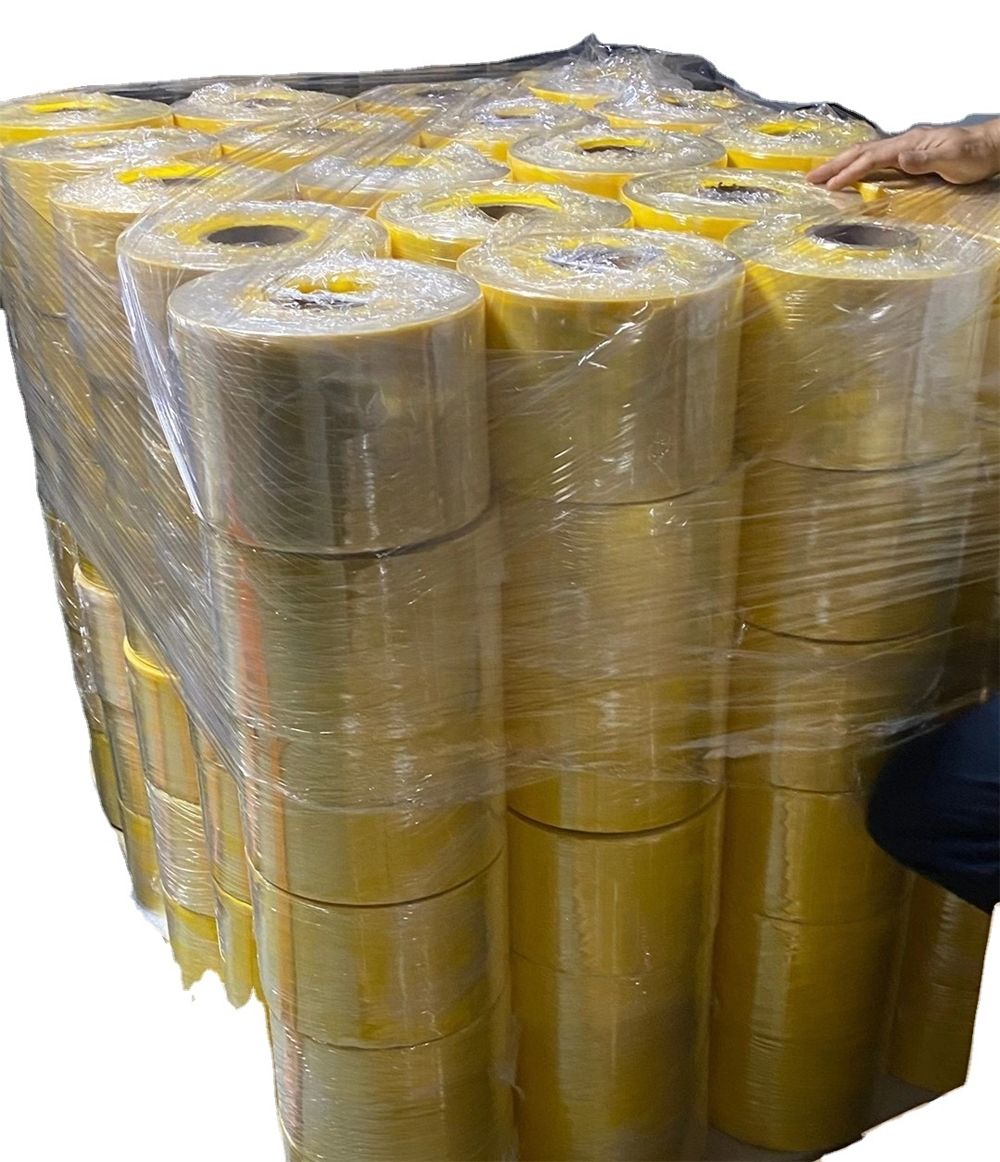
- Roll length: 50m–100m rolls optimized for nursery-scale consumption — fewer roll changes per shift.
PhytoSanitary Compliance and Regulatory Alignment
International plant health regulations increasingly favor non-chemical pest management tools. Tree banding tape supports compliance across major regulatory frameworks:
- USDA APHIS (United States): Physical barriers qualify as IPM tools under National Nursery Stock regulations. Tape residue on trunks does not constitute a treated surface requiring disclosure.
- EU Plant Health Regulation (EU 2016/2031): Non-chemical interception methods align with sustainable production requirements under the EU plant passport system.
- Canadian CFIA: Sticky bands are recognized monitoring and interception tools in nursery IPM guidelines for regulated pest species.
For exporters shipping nursery stock to regulated markets, documenting tree banding tape use in the IPM log strengthens phytosanitary certificate applications and reduces the risk of rejection at port inspection.
Application Best Practices for Nursery Operations
Maximizing effectiveness follows a simple protocol:
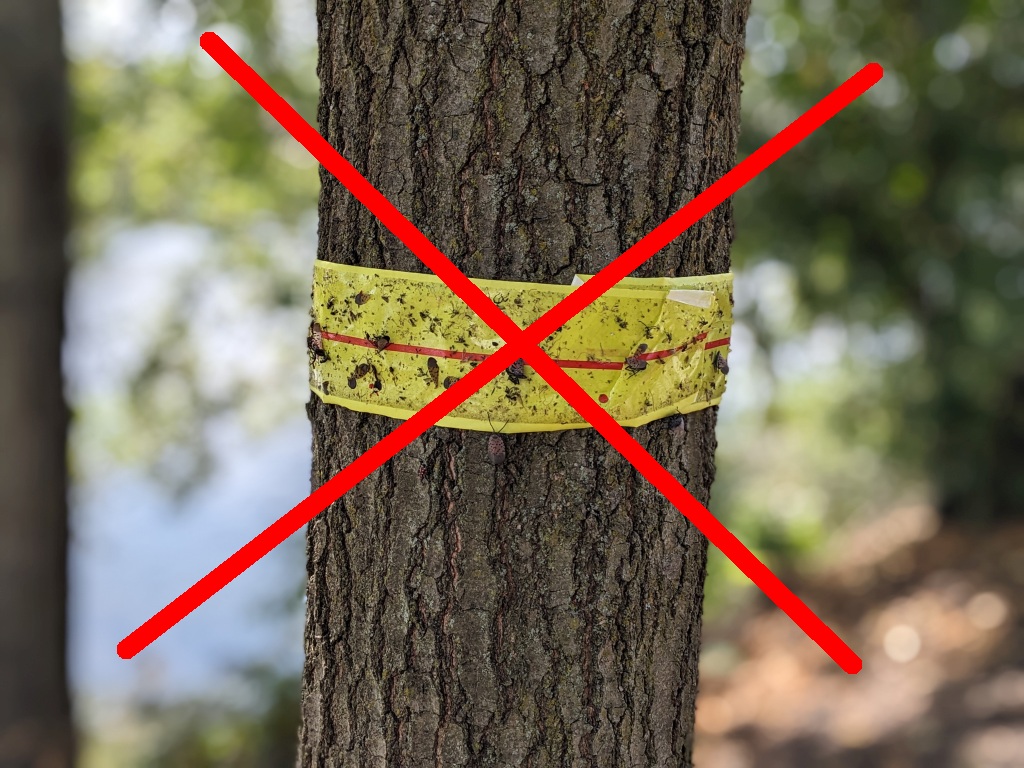
- Apply to clean, dry bark: Adhesion failure on wet bark is the most common installation error. Allow 24–48 hours after potting for bark to dry.
- Overlap by 10–15mm: Wrap with sufficient overlap to prevent gaps where crawlers can pass underneath.
- Position at 15–30cm above soil line: Intercepts crawlers migrating upward from root-zone infestations or container surfaces.
- Replace every 60–90 days: In high-UV or heavy-rainfall regions, check adhesive tack monthly and replace when capture rates decline.
- Log application dates: Record tape type, application date, and trunk diameter for phytosanitary documentation.
Volume Purchasing for Nursery Buyers
Wholesale nursery operations consume tree banding tape at scale — a 50-acre container nursery may use 200–500 rolls per season. Purchasing directly from the manufacturer eliminates distributor markup and ensures consistent adhesive quality across batches. Key benefits of direct sourcing include custom roll widths (48/50/60mm), private label packaging for your distributor network, and MOQs sized for nursery-scale consumption rather than retail packaging units.
Frequently Asked Questions
How long does tree banding tape last on nursery stock outdoors?
Professional-grade tape maintains adhesive effectiveness for 60–90 days in temperate climates with moderate UV exposure. In high-UV or tropical environments, inspect monthly and replace when the sticky surface loses tack. Heavy rainfall can accelerate degradation — choose weather-rated products for irrigated fields.
Can tree banding tape be applied to freshly potted stock?
Yes, but ensure the bark surface is dry. Freshly potted stock often has residual soil moisture on the trunk base. Allow 24–48 hours after potting, then apply tape at 15–30cm above the container rim.
Does tree banding tape meet USDA APHIS phytosanitary requirements?
Tape is a physical barrier, not a chemical treatment. It qualifies as an IPM tool under USDA nursery stock guidelines. Document tape use in your IPM log — include product type, application date, and coverage area — to support certificate applications.
What is the minimum order quantity for wholesale tape?
Contact us for current MOQs, custom width availability, and volume pricing tiers. We offer quantities sized for nursery-scale operations rather than retail units.
Can tape be used on both container and field-grown trees?
Absolutely. It works on any trunk from 1cm seedlings to 15cm+ landscape trees. For field stock, apply at 15–30cm above ground level. For container stock, apply just above the container rim to intercept crawlers migrating from the pot surface.
How does tree banding tape compare to grease bands?
Tape outperforms grease bands with cleaner application (no petroleum-based grease), longer effective duration (60–90 days vs. 30–45), and better phytosanitary compliance with no chemical residue concerns at destination inspection.
Contact Shandong NongZhiWang
Tree Banding Tape Manufacturer | OEM & Wholesale Available
|
WhatsApp +86 155 5018 1368 +86 186 6080 2692 |
WeChat +86 188 5516 6509 +86 155 5018 1368 |
|
Email keenfly100@gmail.com Website |
|
Related Products
- Tree Banding Tape for Vineyards — Grape vine crawler barrier wholesale guide
- Tree Banding Tape for Macadamia Orchards — B2B IPM for nut orchards
- Tree Banding Tape for Olive Orchards — Mediterranean pest barrier wholesale
Further Reading
- Nursery Ornamental Tree Crawler Barrier — Wholesale guide for ornamental growers
- Christmas Tree Farm B2B Guide — Tape for conifer operations
- Landscapers Commercial Property Guide — Solutions for property managers
Request a Quote or Free Sample
KEENFLY (Shandong NongZhiWang Agricultural Technology Co., Ltd.) makes this product in our own factory in Shandong, China. Wholesale, OEM and private label: send your target size, glue load, printed artwork and annual volume and we reply with the specification and quotation.
We reply within 24 hours.
WhatsApp: +86 155 5018 1368 / +86 186 6080 2692
WeChat: +86 188 5516 6509 / +86 155 5018 1368
Email: keenfly100@gmail.com