Tree Banding Tape for Cocoa Plantations: Ant and Mealybug Barrier | Shandong NongZhiWang
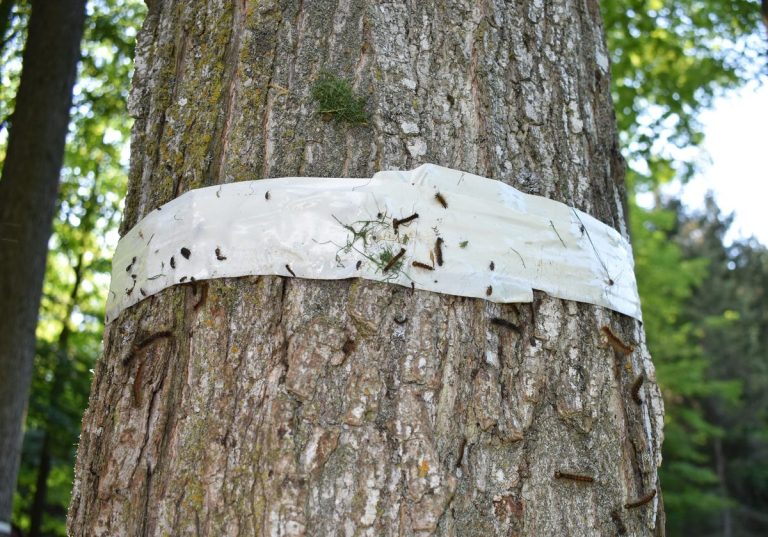
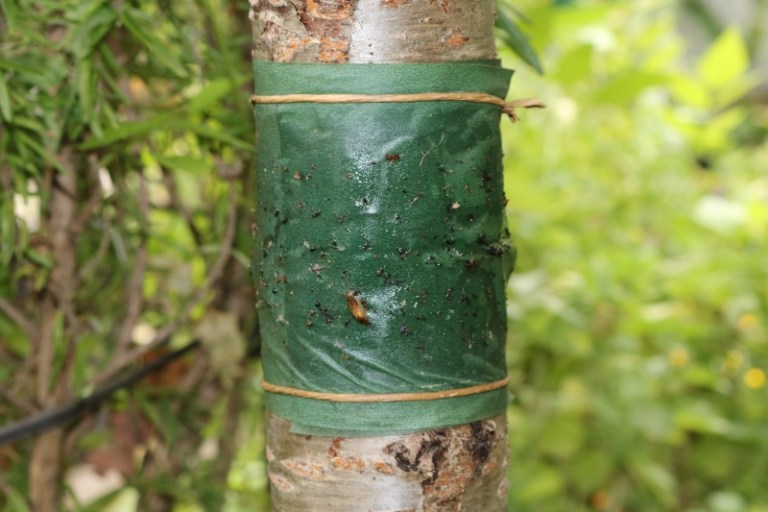
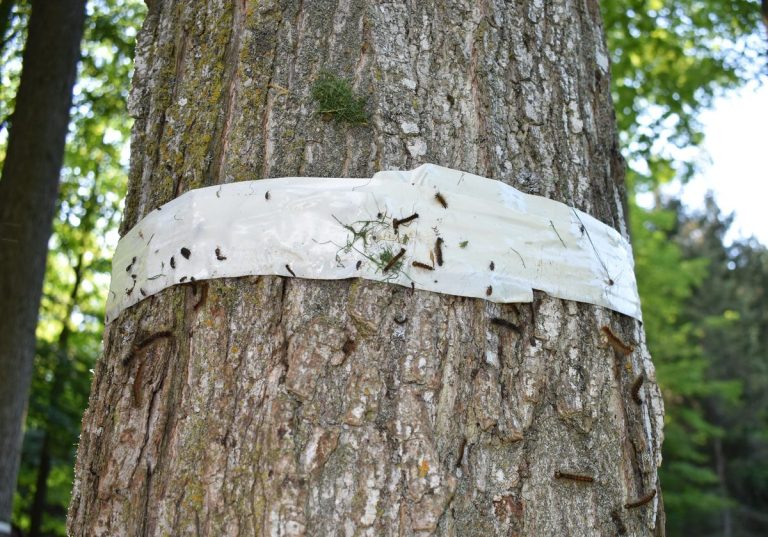
Cocoa trunks are the highway every ground-dwelling pest uses to reach pods, flowers and new flush. Tree banding tape — also supplied as crawler barrier ribbon — puts one continuous sticky ring across that route. For plantation groups, co-operatives, importers and buyers of agricultural pest control products wholesale, it is a non-chemical element that slots into an integrated pest management (IPM) program and into residue-sensitive export supply chains.
Why the Ant–Mealybug Relationship Matters in Cocoa
Ants feed on the honeydew excreted by mealybugs, aphids and scale insects, then defend those colonies from lady beetles, lacewings and parasitic wasps, and carry the mobile crawlers onto fresh host sites. Early Gold Coast research recorded Crematogaster ants attending the mealybug linked to cocoa swollen-shoot virus and used a trunk band to stop the ants climbing; later work in Malaysia and West Africa confirmed how readily ants move mealybugs between trees.
The result is a pest population that scouting alone underestimates: uncollected honeydew supports sooty mould on leaves and pods, mealybug feeding weakens new flush, and nursery stock takes the heaviest losses. Published reviews of Planococcus mealybugs in plantation crops name ant attendance as the accelerating factor.
Placement is selective rather than estate-wide: because some ant species are valued biological control partners in cocoa, bands go where the ant–mealybug association causes losses — field edges, shade trees, nursery rows and blocks with a history of sooty mould.
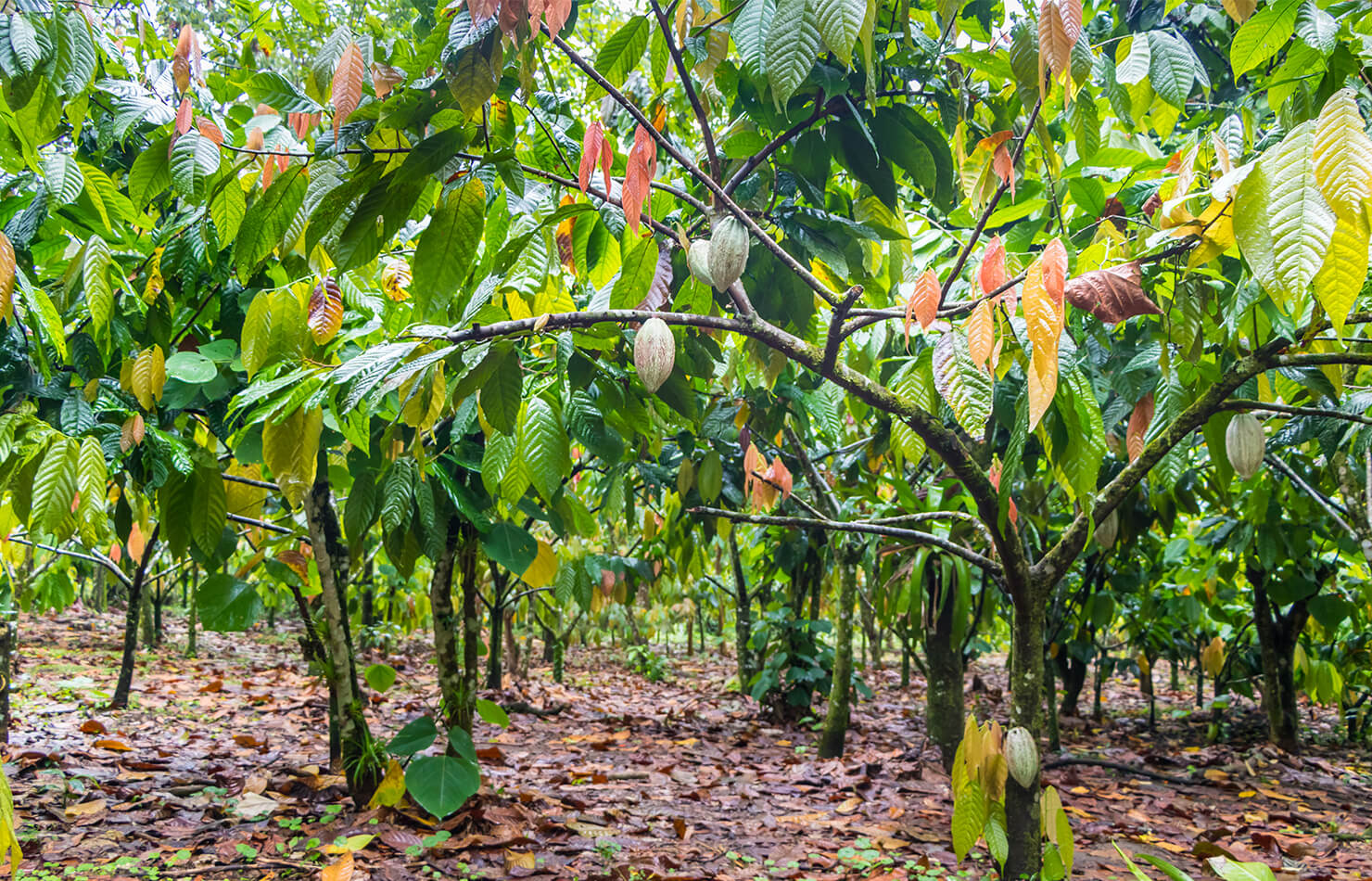
Where to Place Bands in a Cocoa Block
Performance depends on placement, not adhesive strength. Published orchard trials show the band only works when the crawlers’ routes are cut:
- Main trunks — wrap a full circle on clean bark, about 30–50 cm above the soil line, where ants move up from the litter and shade-house floor
- Bridge control — prune low branches that touch the ground, keep the circle of grass mown and remove twigs that lean across the band; trial trees that were banded but left bridged still showed ant traffic
- Overlap — press the tape ends over each other by 3–5 cm so nothing crosses the seam, and work the tape into bark crevices on rough trunks
- Inspection — check every 2–4 weeks during the wet season and renew a band once its surface is fully loaded with insects and debris
- Removal — cut the band vertically at season end and dispose of it with normal field waste; the adhesive bonds to the tape substrate, not to the bark
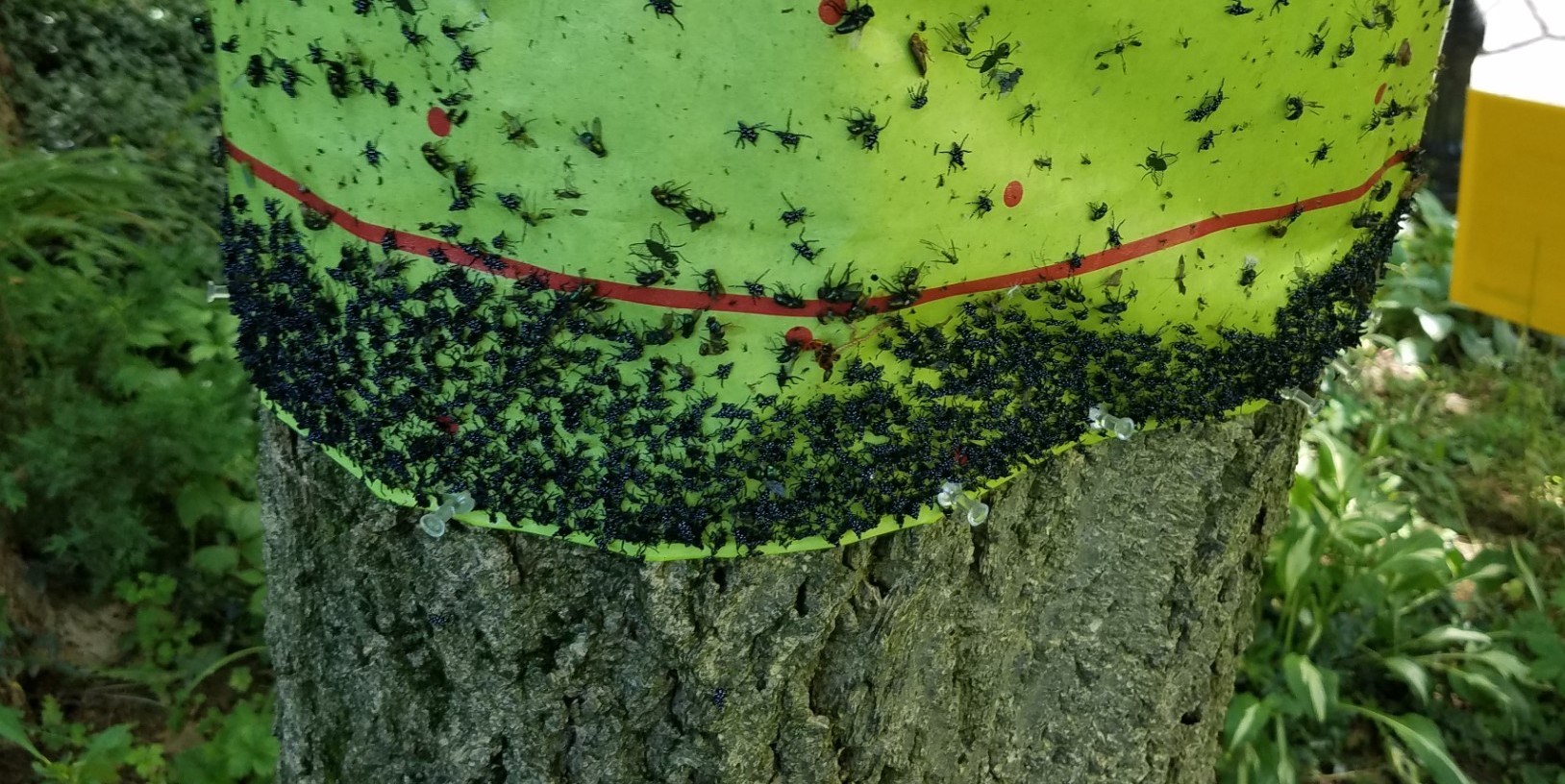
What a Trunk Band Intercepts
- Mealybug crawlers — the mobile stage moving from soil, litter and lower bark up into the canopy
- Scale crawlers — settling on woody tissue and building the next season’s colonies
- Honeydew-farming ants — the escort species that protect and disperse sap-feeding insects
- Aphid and leafhopper migrants — wingless forms walking between hosts in the block
Ground-active larvae — travelling from mulch and shade-tree litter to pods
Specifications for Wholesale Plantation Programs
Shandong NongZhiWang Agricultural Technology Co., Ltd. (山东农之望农业科技有限公司) manufactures tree banding tape factory-direct, so distributors, plantation buyers and wholesalers specify the roll instead of adapting a retail product:
- Roll formats — widths from 50 mm to 150 mm, roll lengths from 20 m to 100 m, single-sided and double-sided constructions
- Film choice — standard yellow or discreet black film, including UV-stabilized grades for long field exposure
- Documentation — MSDS and specification sheets to support import clearance and supplier approval files
- Logistics — palletised or container loading with full export paperwork; MOQ and lead time depend on the final specification
OEM and private label — printed logo, custom labels, barcode-ready cartons and palletised packing
Pricing, current MOQ and delivery windows are quoted per configuration — contact us with your width, roll length, tree spacing and destination port for one reply covering specification, slot and freight.
Frequently Asked Questions
What does tree banding tape do in a cocoa plantation?
A continuous sticky ring on the main trunk intercepts ants and crawlers before they reach pods and flush, interrupting the ant–mealybug link that lets mealybug populations build and spread.
Will a band disturb beneficial ants used for biological control?
Banding goes only into blocks where the ant–mealybug association causes damage, so colonies used as biological control partners can be left unbanded. Share your block map and we will help plan placement.
Is a trunk band compatible with organic and residue-sensitive programs?
It is a physical barrier with no pesticide active ingredient and no residue on pods or foliage, so it supports IPM programs and residue-sensitive supply chains.
How much tape does a plantation need per hectare?
It depends on tree spacing, trunk diameter, shade and boundary trees and your renewal schedule. Send the block layout and we will calculate rolls per hectare with an allowance for seams and mid-season renewal.
Can you supply our brand and packaging?
Yes: printed logo, custom labelling, retail or bulk packaging and barcode-ready cartons. Send your artwork and pack format and we will confirm the MOQ.
How should a plantation program order for the season?
Order ahead of the main flush when crews install bands, and hold a smaller top-up quantity for wet-season renewal. Share width, roll length, quantity and destination port for one reply covering slot and freight.
Contact Shandong NongZhiWang
Planning a banding program for your cocoa plantation, shade trees or mixed crop blocks? Contact us for wholesale offers, samples and custom specifications.
| +86 155 5018 1368 | |
| +86 186 6080 2692 | |
| +86 188 5516 6509 | |
| +86 155 5018 1368 | |
| keenfly100@gmail.com | |
| Website | wisetraps.com |
Recommended Products
- Yellow Tree Banding Tape 10 cm × 30 m — Orchard Crawler Barrier
- Black Tree Banding Tape 10 cm × 100 m — Crawler Barrier Ribbon
- Non-Toxic Tree Banding Tape — Crawler Barrier for Orchard and Forestry