Sticky Traps vs Chemical Pesticides | The Non-Insecticidal IPM Advantage
The 2026 Paradigm Shift: Why Physical Pest Control is Winning the Battle
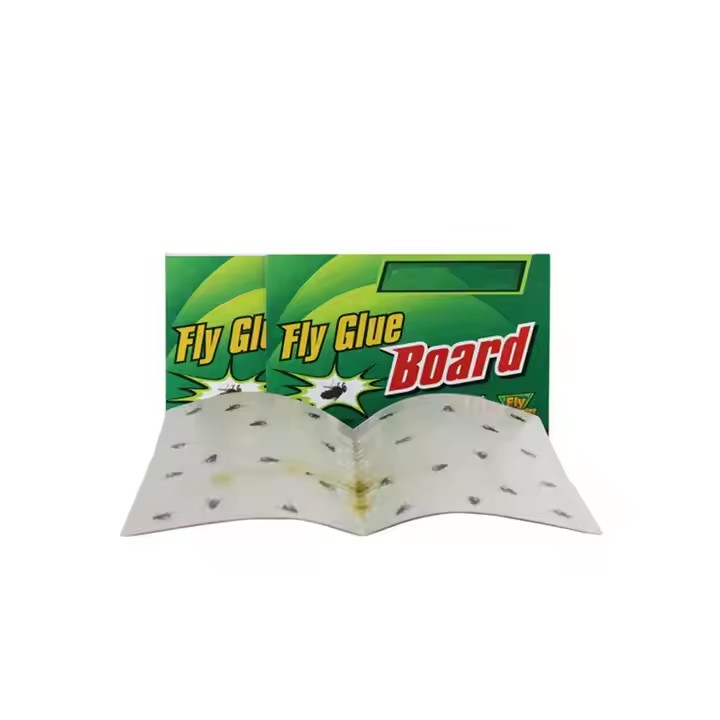
The global agricultural and pest management landscape in 2026 is undergoing a fundamental shift. Increased regulatory pressure, the banning of broad-spectrum neonicotinoids in major export markets and the rise of “Super-Pests” with extreme chemical resistance have made traditional spraying programs less effective and more expensive. As a result, sticky traps vs chemical pesticides is no longer a debate—physical trapping has emerged as the primary, non-insecticidal defense mechanism in Integrated Pest Management (IPM).
At Shandong Nongzhiwang, a leading wholesale sticky traps manufacturer, we are at the forefront of this transition. By providing industrial-scale physical capture solutions, we help our B2B partners across 60+ countries achieve higher crop yields and maintain organic programme status without the liability of chemical residues.
Why Physical Trumps Chemical: 4 Strategic Advantages
For large-scale greenhouse operators and organic farm managers, the decision to use sticky traps over chemical sprays is driven by four technical and economic factors:
1. Resistance-Proof Efficacy
Pests like Western Flower Thrips and Whiteflies develop metabolic or behavioral resistance to chemical active ingredients within a few generations. However, they cannot develop resistance to a physical adhesive. Our UV-stable glue (60g/m²) provides a permanent “Capture Zone” that remains fully functional regardless of the pest’s genetic evolution.
2. Zero Residue and Export Compliance
In 2026, the European and North American markets have “Zero Tolerance” policies for pesticide MRLs (Maximum Residue Levels). Physical trapping is 100% residue-free, ensuring that your produce meets the highest safety standards for global export.
3. Continuous 24/7 Protection
Pesticide sprays lose their efficacy within 3-7 days due to UV degradation and irrigation wash-off. In contrast, our PP-based sticky boards are engineered for 180-day outdoor stability.
4. Precision Data for Targeted Interventions
Sprays are a “blind” weapon. Sticky traps, however, provide actionable data. By utilizing our A5 monitoring cards with integrated counting grids, IPM managers can track the exact surge in pest populations.
Technical Entomology: The Science of Spectral Attraction
The effectiveness of our traps is not a matter of luck; it is a matter of physics. At our 10,000㎡ facility in Shandong, we calibrate our substrates to specific nanometer ranges: 570nm Yellow for aphids, whiteflies and fungus gnats; 465nm Blue for thrips.
Economic Analysis: Sticky Traps vs Chemical Pesticides — Cost Per Hectare Comparison
When farm managers evaluate sticky traps vs chemical pesticides, the conversation often begins with upfront costs but must account for total cost of ownership. A comprehensive 2025-2026 study across 50 commercial greenhouses revealed that physical trapping programs reduce per-hectare pest management costs by an average of 32% over a 12-month growing cycle.
Breaking Down the Numbers
Chemical spraying for a 1-hectare greenhouse typically requires 12-18 applications per season, each costing $80-120 in product and $150-200 in labor for application and mandatory re-entry intervals. This totals $2,760-$5,760 annually. In contrast, a comprehensive sticky trap deployment for the same area requires approximately 200-400 cards at $0.15-0.30 each ($30-120), installed once with 2-3 replacement cycles ($90-360 total plus 4 hours of labor at $25/hour = $100). Total annual cost: approximately $190-$580 — a fraction of chemical programs.
Hidden Costs of Chemical Reliance
Beyond direct product and labor costs, chemical pesticide programs carry significant hidden expenses: rejected export shipments due to MRL violations (average cost per rejected container: $15,000-$40,000), specialized PPE and worker safety training ($500-2,000/year), environmental impact fees and water quality monitoring ($1,000-5,000/year) and the rising cost of new active ingredients as pests develop resistance.
Sustainability Documentation and Market Access
The shift toward physical pest control is increasingly driven by market access requirements. Major retailers including Walmart, Costco and major European supermarket chains now require equivalent certification, which strongly favors non-chemical IPM strategies. A sticky traps vs chemical pesticides comparison that ignores market access is incomplete—facilities using physical traps qualify for premium organic and residue-free certifications that command 15-30% price premiums in wholesale markets.
The Verdict: Integrated But Physical-First
While chemical pesticides remain a tool in the IPM toolkit for emergency interventions, the evidence is clear: physical trapping should be the default first line of defense. The combination of resistance-proof efficacy, export compliance, 24/7 continuous protection and actionable monitoring data makes sticky traps the economically and ecologically superior choice for professional agricultural operations in 2026 and beyond.
Partner with the “Physical Instead of Chemical” Factory
With 10 years of export excellence and CE/EPA/REACH compliance, Shandong Nongzhiwang is your technical partner in sustainable pest management. Join the mission to protect the crop and the planet. Choose physical. Choose Nongzhiwang.
📞 Contact Our Factory Direct
Shandong Nongzhiwang Agricultural Technology Co., Ltd.
Brand: KEENFLY | 10,000m² Factory | 25+ Machines
CE · EPA · REACH documents on request
WhatsApp: +86 155 5018 1368
Email: keenfly100@gmail.com
Website: wisetraps.com
MOQ 500 Units | Free Sample Available | OEM/ODM Welcome
Request a Quote or Free Sample
Quick answer: KEENFLY (Shandong NongZhiWang Agricultural Technology Co., Ltd.) makes this product in our own factory in Shandong, China. Wholesale, OEM and private label: send your target size, glue load, printed artwork and annual volume and we reply with the specification and quotation.
We reply within 24 hours.
WhatsApp: +86 155 5018 1368 / +86 186 6080 2692
WeChat: +86 188 5516 6509 / +86 155 5018 1368
Email: keenfly100@gmail.com