Fruit Fly Sticky Board for Orchards: Wholesale B2B Guide | KEENFLY
Quick answer: The Mediterranean fruit fly (Ceratitis capitata) and other fruit fly species cause billions of dollars in crop losses worldwide each year.
Fruit Fly Sticky Board: Orchard-Grade B2B Monitoring Solution
The Mediterranean fruit fly (Ceratitis capitata) and other fruit fly species cause billions of dollars in crop losses worldwide each year. For orchard managers, citrus growers and agricultural cooperatives, sticky board monitoring is the first line of defense — providing early detection data that drives IPM decision-making.
KEENFLY manufactures wholesale fruit fly sticky boards designed for professional orchard pest management programs, agricultural extension services and B2B distributors serving the horticulture sector.
Why Sticky Boards Are Essential for Orchard IPM
Fruit fly sticky boards serve two critical functions in integrated pest management:
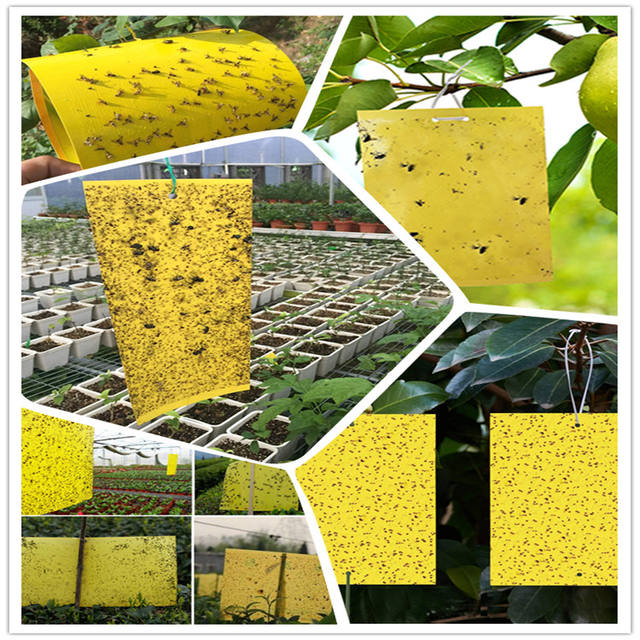
- Early detection: Yellow sticky boards attract and trap adult fruit flies, providing population density data before visible crop damage occurs
- Threshold monitoring: Trap counts per board per week determine when to trigger mass trapping or targeted pesticide applications
- Regulatory compliance: Many export markets require documented pest monitoring as a condition of phytosanitary certification
Research published by USDA-ARS confirms that systematic sticky board monitoring in Mediterranean climates reduces unnecessary pesticide applications by 30–50% while maintaining equivalent crop protection levels.
Target Pest Species
| Pest Species | Primary Host Crops | Geographic Range |
|---|---|---|
| Mediterranean fruit fly (Medfly) | Citrus, stone fruit, mango, pepper | Mediterranean, Central/South America, Hawaii |
| Oriental fruit fly | Mango, papaya, citrus, guava | Southeast Asia, Pacific Islands |
| Melon fly | Melon, cucumber, tomato, pepper | Asia, Africa, Pacific |
| Spotted wing drosophila | Berry fruits, cherry, grape | East Asia, global spread |
| Coffee berry borer | Coffee (monitoring) | Africa, Central/South America |
Application Methods
Canopy Trapping
Sticky boards are hung at 1.5–2.0 meters above ground level within the tree canopy, where adult fruit flies are most active. For citrus orchards, place one board per 10 trees in a grid pattern for population monitoring.
Mass Trapping perimeters
High-density deployment along orchard borders creates a protective barrier against incoming pest populations from neighboring properties or wild host areas.
Nursery & Greenhouse Monitoring
Smaller-format sticky boards are ideal for protecting nursery stock and greenhouse-grown fruit crops where early detection prevents establishment of pest populations.
Product Specifications
| Specification | Details |
|---|---|
| Board Size | 25×40 cm / 25×30 cm / Custom |
| Color | Yellow (standard), Blue (thrips variant) |
| Adhesive | Weather-resistant, rainproof, UV-stable |
| Surface | Grid-printed for easy counting |
| Material | PP sheet / Cardboard / Corrugated plastic |
| Packaging | 100 pcs/bag, 500 pcs/carton (custom available) |
OEM & Agricultural Extension Services
As a direct manufacturer, KEENFLY supports agricultural cooperatives, government pest monitoring programs and B2B distributors with:
- Custom sizes matching local trapping protocols (e.g., McPhail trap inserts, yellow panel standards)
- Private label printing for distribution programs
- Bulk FCL pricing with lead times of 15–20 days
- Technical support for trap placement and monitoring protocols
Frequently Asked Questions
1. How many fruit fly sticky boards do I need per hectare?
For monitoring purposes, we recommend 8–12 boards per hectare in a grid pattern. For mass trapping, increase density to 25–40 boards per hectare along orchard perimeters.
2. Can fruit fly sticky boards withstand rain and irrigation?
Yes. Our boards feature waterproof PP material with rainproof adhesive that maintains effectiveness through heavy rain and overhead irrigation. Expected outdoor lifespan is 4–8 weeks.
3. Are these boards suited to physical control programmes?
Absolutely. Sticky boards are a non-chemical, zero-residue monitoring tool compatible with low-residue and sustainable agriculture programmes.
4. Do you offer custom sizes for specific trapping protocols?
Yes. We manufacture boards in standard and custom dimensions to match McPhail traps, yellow panel traps and country-specific monitoring requirements. MOQ for custom sizes is 500 pieces.
5. What is the typical MOQ and lead time?
Standard sizes: MOQ 500 pieces, lead time of 15-20 days. Custom OEM orders: MOQ 500 pieces, lead time of 25-30 days. We ship FCL and LCL worldwide.
6. Can I request samples before placing a bulk order?
Yes. We provide free samples for qualified agricultural distributors, cooperatives and pest management professionals. Sample shipping costs are covered by the buyer.
Request a Quote or Free Sample
KEENFLY (Shandong NongZhiWang Agricultural Technology Co., Ltd.) makes this product in our own factory in Shandong, China. Wholesale, OEM and private label: send your target size, glue load, printed artwork and annual volume and we reply with the specification and quotation.
We reply within 24 hours.
WhatsApp: +86 155 5018 1368 / +86 186 6080 2692
WeChat: +86 188 5516 6509 / +86 155 5018 1368
Email: keenfly100@gmail.com