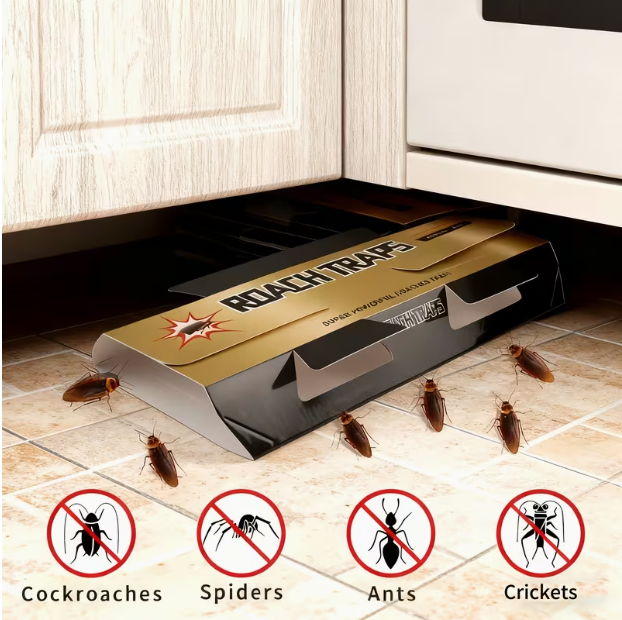
Cockroach Glue Trap Wholesale: Why Trap Counts Drop
Quick answer: A sticky board measures insects that contact its surface, so a lower count can reflect the board, not the cockroach population.; Dust load, insect pressure and temperature change how effectively the adhesive performs in the field, and those factors shift between service visits.
Distributors, importers and PCO operators see it on every service route: a site that produced heavy catches for months suddenly returns thin boards. If that drop is read as an infestation decline, monitoring stops early. A cockroach glue trap wholesale programme only protects that reading if the adhesive is still doing its work, which is why KEENFLY and its buyers treat a falling count as a question to confirm, not a result to celebrate.
Key takeaways
- A sticky board measures insects that contact its surface, so a lower count can reflect the board, not the cockroach population.
- Dust load, insect pressure and temperature change how effectively the adhesive performs in the field, and those factors shift between service visits.
- A crowded board can be saturated, so a fresh card in the same position is the fastest confirmation a PCO has.
- PCOs confirm a trend by holding placement, quantity and exposure time constant, then cross-checking against inspection evidence.
- KEENFLY supplies boards factory-direct to B2B buyers, with daily output exceeding 500,000 pieces for standard specifications.
- Physical and mechanical pest control with sticky boards sits within an environmentally responsible positioning that does not depend on spraying.
- Minimum order quantities follow what is ordered: stock items have no minimum, OEM or custom product is 500 pieces per design, roll goods are 1,000 rolls, custom packaging is 500 pieces and samples are 10 pieces.
Why is a cockroach glue trap count only a signal, not the population?
A cockroach glue trap is a sampling instrument. It reports the cockroaches that touched its coated surface during one exposure window, and nothing else. The service data is only as reliable as that coating, which is why a quiet board is evidence about the board first and about the infestation second.
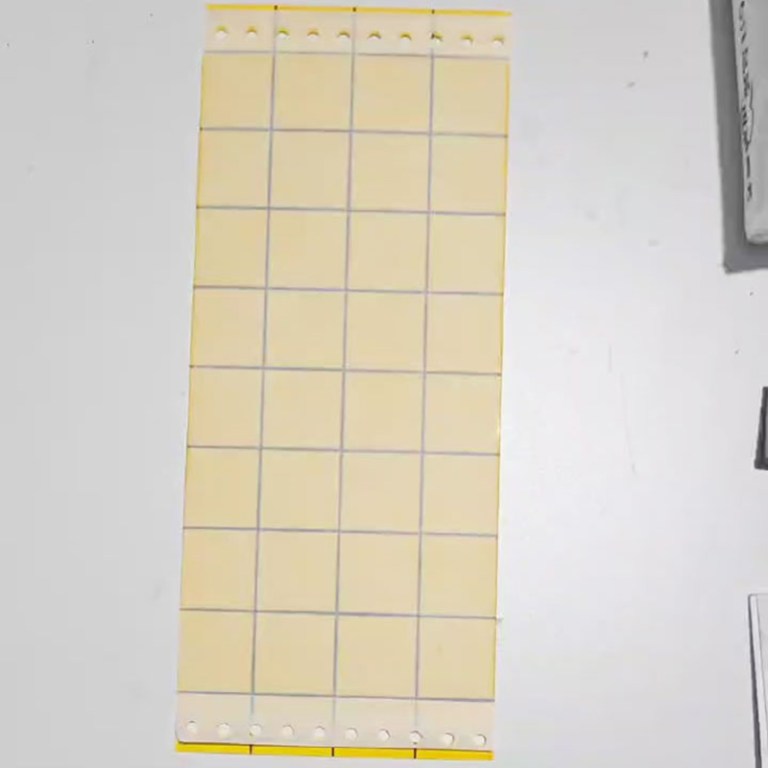
KEENFLY applies adhesive in-house onto PE, PP or kraft stock, single or double sided, at the glue weight the customer specifies, then laminates release film onto the coated stock in-house. That control over the coating step is what keeps monitoring boards consistent from batch to batch across a PCO route. The catalogue name for this family is Cockroach Trap Roach.
Ask your supplier how a batch is coated and laminated before you compare catches between sites. A buyer comparing two suppliers should be able to confirm that the coating specification is the same, because a catch comparison is meaningless otherwise.
What makes a trap count fall while the infestation continues?
The usual causes are physical rather than biological. The adhesive stays effective for sixty to ninety days in the field, depending on dust load, insect pressure and temperature, so a board placed near a busy doorway picks up debris that reduces tack long before the exposure window ends.
Three conditions move together on real sites. Dust load settles onto the coated surface, insect pressure fills the usable area, and temperature shifts the tack of the adhesive. Any one of them lowers the number of cockroaches a board can still hold, so a drop across a whole route often tracks a season rather than a treatment result.
PCOs respond by keeping every variable they control fixed. The board stays at the same coordinate, the quantity per unit stays the same and the exposure window between visits stays the same, which turns a drop into a number that can actually be interpreted.
How do PCOs confirm that a falling count is real?
Confirmation is a comparison, not a judgement. A PCO places a fresh board in the same position with the same exposure period, then checks the inspection evidence around it, and only then adjusts the service plan for the site.
The first check is placement. A board moved even slightly closer to or further from harbourage reports a different cockroach route, so route notes record coordinates rather than descriptions. The second check is freshness: swapping in a new board and watching whether catches rebound immediately tells the technician whether the earlier low number came from a saturated or dusty surface.
The third check is evidence outside the board. Droppings, casings, smears and harbourage findings either agree with the low count or contradict it, and a contradiction keeps the monitoring programme open. KEENFLY notes that enquiries are answered within twenty-four hours, so a buyer can raise a specification question while the technician is still on site.
How do you decide when a monitoring board needs replacing?
Replace on condition, not on the calendar alone. Because the adhesive stays effective for sixty to ninety days in the field, depending on dust load, insect pressure and temperature, a board in a dusty stockroom reaches the end of its useful life sooner than one in a clean office.
The visible cue is surface condition. A board whose coated area is covered in dust and debris can no longer hold what contacts it, so it stops reporting honestly. In those positions PCOs shorten the interval between swaps and record the change, keeping the data set comparable with the rest of the route.
Sticky boards are a physical and mechanical method, so they keep monitoring running without adding spray to the site, and that environmentally responsible positioning is why many buyers standardise on them across mixed-use buildings.
What should a buyer compare when sourcing cockroach glue traps wholesale?
Compare specification control, order flexibility and shipping terms, because those decide whether a monitoring programme can be restocked without gaps. KEENFLY quotes per project rather than publishing prices, so the comparison happens on specification and terms.
Cockroach glue trap wholesale orders leave the factory coated, laminated, die-cut, slit and rewound in-house to the customer’s drawing or die line, width and core length. A buyer therefore specifies board dimensions per site type while keeping the monitoring principle identical across the route, and the Cockroach Trap Roach catalogue name covers the standard family.
Products are described as non-toxic when the statement applies only to the product itself. Minimum order quantities follow what is ordered: stock items have no minimum, OEM or custom product is 500 pieces per design, roll goods are 1,000 rolls, custom packaging is 500 pieces and samples are 10 pieces. Stock items lead in fifteen to twenty days and custom orders in twenty-five to thirty days, and shipping is supported on EXW and FOB terms from a Chinese port agreed per order. The product label is KEENFLY, the official site is wisetraps.com, and the brand holds CE certification, EPA establishment and registration, RoHS compliance, REACH compliance and UKCA certification, with HACCP compliance supporting food-handling environments.
| Buyer decision | What KEENFLY offers | Why it matters for monitoring |
|---|---|---|
| Sourcing route | Factory-direct B2B enquiry, quotations prepared per project | Specifications are set with the factory instead of through a retail listing |
| Specification control | Glue coating, release-film lamination, die-cutting, slitting and rewinding done in-house | Board size, width and core length follow the customer’s drawing or die line |
| Minimum order quantity | Stock items: no minimum. OEM or custom product: 500 pieces per design. Roll goods: 1,000 rolls. Custom packaging: 500 pieces. Samples: 10 pieces | The buyer orders only what a monitoring programme needs |
| Lead time | Stock items: fifteen to twenty days. Custom orders: twenty-five to thirty days | Restocking windows can be planned around service routes |
| Shipping terms | EXW and FOB, shipped from a Chinese port agreed per order | The importer controls freight and clearance |
| Adhesive field life | Sixty to ninety days in the field, depending on dust load, insect pressure and temperature | Replacement intervals follow site conditions rather than a fixed calendar |
FAQ
Does a drop in cockroach trap counts mean the infestation is gone?
No. A lower count can mean the adhesive has lost tack, the board is saturated with dust and debris, or the exposure conditions changed between visits. PCOs confirm the reading by leaving a fresh board in the same position for the same period, then checking droppings, casings and harbourage findings. The adhesive stays effective for sixty to ninety days in the field, depending on dust load, insect pressure and temperature, so one quiet reading should not close a monitoring programme on its own.
Why do two identical boards at the same site catch different numbers?
Because position relative to harbourage and the conditions around each board change between checks. Cockroaches travel routes, so a board placed beside a run reports more than one set slightly apart. Temperature, dust load, insect pressure and surface saturation also change the effective tack of the adhesive. PCOs keep placement coordinates, board quantity and exposure time constant so that counts taken on different visits can be compared with confidence.
How do I order cockroach glue trap samples or wholesale quotations?
KEENFLY quotes per project rather than selling online, so a distributor or importer sends the site type, board size and any packaging requirement to the team, which responds within twenty-four hours. Samples are 10 pieces, stock items have no minimum, OEM or custom product is 500 pieces per design, roll goods are 1,000 rolls and custom packaging is 500 pieces. Stock items lead in fifteen to twenty days and custom orders in twenty-five to thirty days, with EXW and FOB shipping supported from a Chinese port agreed per order.


Request a Quote or Free Sample
KEENFLY (Shandong NongZhiWang Agricultural Technology Co., Ltd.) makes this product in our own factory in Shandong, China. Wholesale, OEM and private label: send your target size, glue load, printed artwork and annual volume and we reply with the specification and quotation.
We reply within 24 hours.
WhatsApp: +86 155 5018 1368 / +86 186 6080 2692
WeChat: +86 188 5516 6509 / +86 155 5018 1368
Email: keenfly100@gmail.com